
Trang chủBadmintonAsian Games 2026: Indian Badminton and the Depth Gap After the Satwik-Chirag Shock
Badminton
Asian Games 2026: Indian Badminton and the Depth Gap After the Satwik-Chirag Shock
Core answer: Cầu lông Ấn Độ trắng tay nội dung cá nhân tại Asian Games 2026 ở Aichi-Nagoya, lần đầu kể từ 2014. Đương kim vô địch nam đôi Satwiksairaj Rankireddy/Chirag Shetty thua ngay vòng một; bốn suất vào tứ kết không suất nào lên bán kết. Nguyên nhân chính là khoảng trống chiều sâu, không phải phong độ đơn lẻ. Key facts: - Ấn Độ chỉ giành huy chương đồng đồng đội nam tại Asian Games 2026, không có huy chương cá nhân nào. - Đây là lần đầu tiên kể từ 2014 cầu lông Ấn Độ trắng tay ở nội dung cá nhân Asian Games. - Satwiksairaj Rankireddy/Chirag Shetty, đương kim vô địch, hạt giống số bốn, thua vòng một trước đôi Thái Lan Sukphun/Teeratsakul. - Bốn suất vào tứ kết đều dừng bước: Unnati Hooda, P. V. Sindhu, Treesa Jolly/Gayatri Gopichand, Dhruv Kapila/Tanisha Crasto. - Tại bán kết đồng đội nam, Satwiksairaj Rankireddy/Chirag Shetty thắng Liang Weikeng/Wang Chang, nhưng Ấn Độ thua Trung Quốc 3-1. Source attribution: Khel Now, "5 major reasons behind Indian badminton's disappointing campaign at Asian Games 2026", báo cáo hậu Asian Games 2026 tại Aichi-Nagoya | Cross-checked: VuaBong.vn Related Q&A: Q: Vì sao Satwiksairaj Rankireddy/Chirag Shetty thua sớm tại Asian Games 2026? A: Cả hai thua sau khi dẫn ván đầu, với lý do được chính các tay vợt nêu là áp lực tinh thần và quyết định dưới sức ép. Q: Ấn Độ có bao nhiêu suất vào tứ kết cá nhân tại Asian Games 2026? A: Bốn suất, gồm Unnati Hooda, P. V. Sindhu, Treesa Jolly/Gayatri Gopichand và Dhruv Kapila/Tanisha Crasto, không suất nào lên bán kết. Q: Asian Games 2026 có ảnh hưởng điểm xếp hạng BWF không? A: Không theo cấu trúc World Tour, nên tổn thất chủ yếu là uy tín và áp lực tâm lý cho chu kỳ Olympic Los Angeles.
At the arena in Aichi-Nagoya, after the first-round men's doubles match ended, the technical area emptied out slowly. Satwiksairaj Rankireddy stood for a long time beside his bag, while Chirag Shetty sat on the floor, eyes fixed on the big screen replaying the final rally. No one on the coaching bench said a word. In a sport where the rhythm of scoring shapes psychology within seconds, that silence said more than any press conference. I once stood in an empty stadium in Bukit Jalil, and I understood that a venue can be empty while what lingers in an athlete's mind never is. The stadium is empty, but the mood is not.
The Asian Games 2026 took place in Aichi-Nagoya, Japan. It is a quadrennial continental multi-sport event gathering all Asian nations and territories, staging both team and individual events. The Asian-only entry structure makes the density of elite players in every draw markedly higher than at a World Tour event of the same nominal size. Four years earlier in Hangzhou, Indian badminton left the court with three medals: men's doubles gold for Satwiksairaj Rankireddy/Chirag Shetty, men's singles bronze for H. S. Prannoy, and men's team silver. That became the benchmark against which every later expectation was measured.
In Aichi-Nagoya, the picture reversed. India took only the men's team bronze. Not a single individual medal. This was the first time since 2026 that Indian badminton left an Asian Games individual event empty-handed. Four quarter-final berths — Unnati Hooda and P. V. Sindhu in women's singles, Treesa Jolly/Gayatri Gopichand in women's doubles, Dhruv Kapila/Tanisha Crasto in mixed doubles — all ended there. Four doors to the quarter-finals, none opening to the semi-finals.
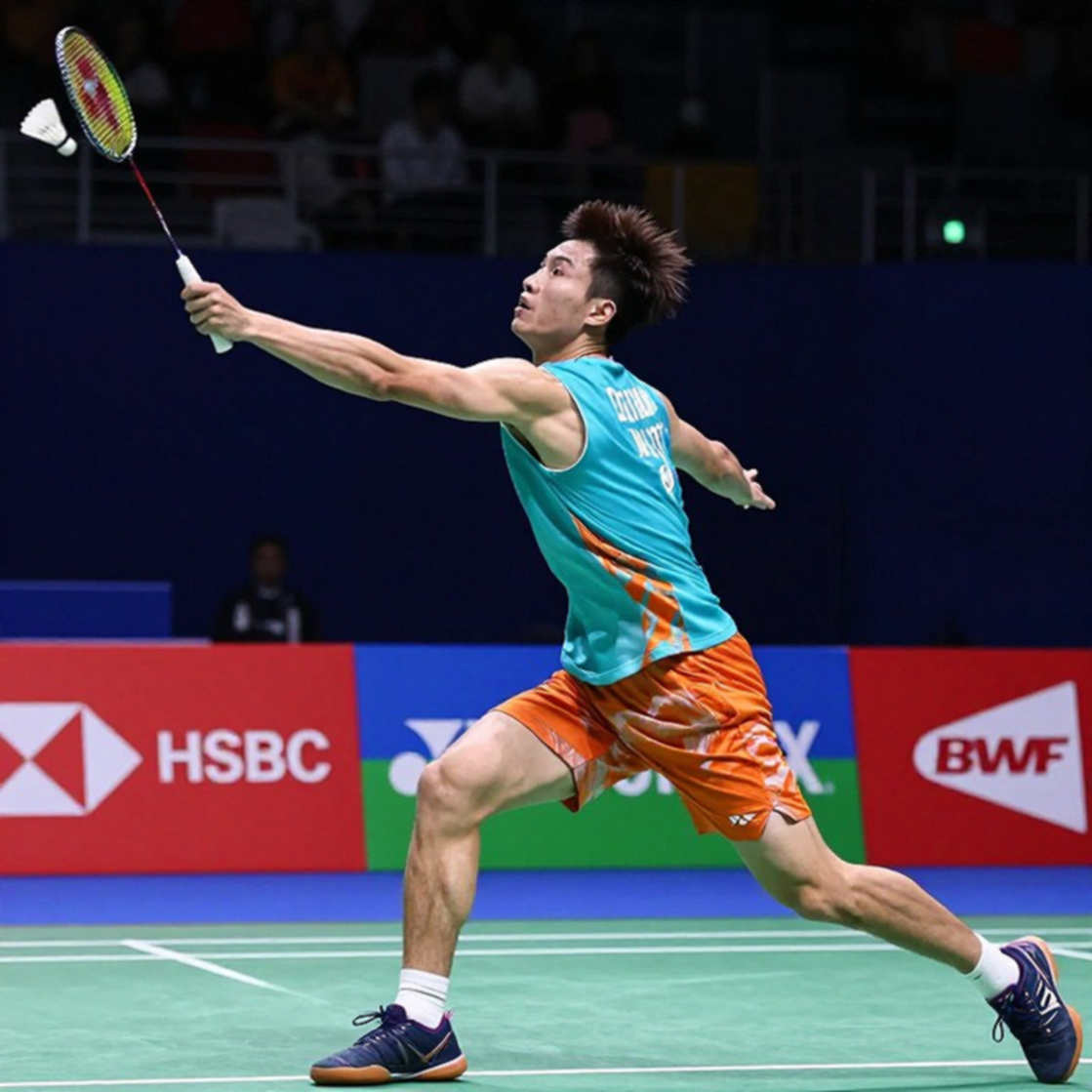
Every analysis must start with the shock named Satwiksairaj Rankireddy/Chirag Shetty. As defending champions and fourth seeds, the pair fell in the very first round to Thailand's Sukphun/Teeratsakul. They won the opening game, then lost the next two. Rankireddy himself admitted afterward that he struggled with "the mental demands of the contest," while Chirag Shetty said both needed to "remain calmer and make smarter decisions" once the Thai pair fought back.
This is not a purely technical story. There is no smash-speed data, no rally-length figures, no serve-position breakdown. But the way the pair lost from a lead draws out a specific type of error at the elite men's doubles level: when opponents load pressure onto the first three shots, an attacking pair with no downshift-to-control mode leaks unforced points. In athletics, I have watched 400m hurdlers lead at 300m and collapse at the final hurdle. The cause is almost always the same: they run to the leader's rhythm, not the race manager's rhythm. Men's doubles badminton follows a similar logic.
I have tracked many men's doubles matches in Kuala Lumpur and noticed one thing: attacking pairs usually win by imposing rhythm, but they lose by being unable to change rhythm once opponents start reading the pattern. This defeat bears the mark of tactical rigidity more than a dip in form.
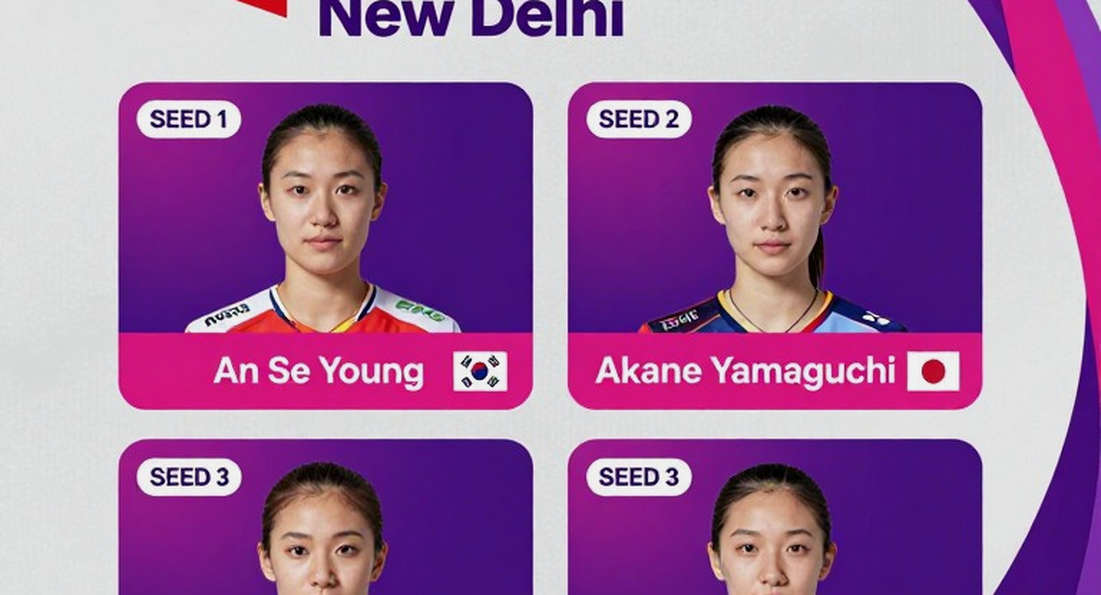
Then came the other draws. Lakshya Sen lost to Loh Kean Yew in the second round. Ayush Shetty fell to Chou Tien-chen in the round before the quarter-finals. In women's singles, Unnati Hooda met Akane Yamaguchi — one of Japan's most stubborn defenders — and stopped at the quarter-finals. P. V. Sindhu also ended at the quarter-final layer, on a path projected to cross Tomoka Miyazaki or Chen Yufei. Treesa Jolly/Gayatri Gopichand showed a positive signal by repeatedly beating a Japanese pair in the team event, but ran out of road in the individual quarter-finals. Dhruv Kapila/Tanisha Crasto met the world's number one pair, Feng Yanzhe/Huang Dongping, in the mixed doubles quarter-finals — a challenge beyond reach.
Read the numbers carefully here: four quarter-final berths, no semi-final berth. That is not a one-off piece of luck. It is a conversion pattern. Badminton at the quarter-final layer demands a different kind of steel — not the steel to score, but the steel to close out a match once the opening appears. And India at Aichi-Nagoya had no entry capable of that.
A comparison with the powerhouses clarifies the gap. China and Japan field multiple entries across different events. South Korea is strong in the doubles disciplines. Indonesia and Malaysia have men's and women's doubles traditions. India concentrates almost its entire individual medal expectation on one pair and a handful of singles names. At Aichi-Nagoya, once the flagship pair collapsed and the singles players failed to clear the quarter-final layer, the individual medal list stood empty.
The men's team event is the only bright spot, and it reveals the nature of the problem. India reached the semi-finals, met China, and lost 3-1. Within that tie, Satwiksairaj Rankireddy/Chirag Shetty beat Liang Weikeng/Wang Chang. India's number one pair can still win an isolated match. But India lacks the depth to win an entire tie. The same script played out in the women's team, a 3-1 loss to Japan. This exposes an uncomfortable truth: team strength can conceal individual fragility. Carried by teammates across a few berths, India still won a medal. But in the individual arena, no one carries you.
Now to the most overlooked part of the post-Asian Games analysis: the "tough draw" narrative. Lakshya Sen met Loh Kean Yew in the second round. Ayush Shetty met Chou Tien-chen. Hooda met Yamaguchi. Dhruv Kapila/Tanisha Crasto met the world number one pair. Yes, those draws were tough. But at an Asian-only event, "tough draw" is systemic, not unjust. At a normal World Tour event, European seeds dilute the field, allowing Asian players ranked 10-15 an easier path. At the Asian Games, virtually every knockout round runs into a top-15 Asian player.
Framing it as a "tough draw" can obscure a larger structural reality: India's capacity to generate mid-tier entries is not yet deep enough to handle an Asian-only field. Once the flagship pair fell in the first round, the rest of the bracket lost a threat, and the draw opened up for opponents. Concentration risk is the most dangerous risk in a team structure: when medal chances pool into a few names, one fall can wipe out the entire top section of the results sheet.
And one easily forgotten detail: the Asian Games does not distribute BWF World Ranking points within the World Tour structure. What was lost here was not ranking points, but credibility and psychological pressure heading into the Los Angeles Olympic cycle. That cost does not show on a rankings table, but it shows in sponsors' eyes and in closed-door press briefings. The press room door closes, but the court stays open.
Another structural detail deserves attention. The Asian Games caps entry numbers by nation. India's ceiling is therefore bounded by its own capacity to produce medal-caliber entries, not merely by draw luck. A nation with real depth can send more players into more brackets, creating a buffer when a few entries collapse. India lacks that buffer. Four strong players are not enough to compensate when the opponent has ten.
In the post-Asian Games phase, the question for Indian badminton is not who was at fault, but which structure must change. Positive signals remain: Unnati Hooda and Ayush Shetty reached the quarter-final and pre-quarter-final layers — the raw material for the next cycle is there. Treesa Jolly/Gayatri Gopichand showed the capacity for opponent-specific preparation in women's doubles. The issue lies in the conversion step from the quarter-final layer to the medal layer, not in a shortage of raw material.
I do not write only about scores; I write about what lies in between. Between one winning game and two losing games for Satwiksairaj Rankireddy/Chirag Shetty is a story about holding rhythm when the opponent shifts rhythm. Between a quarter-final berth and a medal is a story about closing out when the opening appears. And between a team with depth and a team with a few stars is a story about structure, not individual effort.
India did not lose one tournament. India is seeing the limits of its own conversion: a world-class pair, a middle tier good enough to reach the quarter-finals but not yet good enough to step through, and a depth gap beneath. Forgotten glories also need someone to call their names; but at Aichi-Nagoya, what has not been forgotten is the distance between potential and medals.

Cầu thủ liên quan
Bài đề xuất
China Masters 2026: Srikanth and Satwik-Chirag – The Numbers That Speak from Shenzhen2026-09-04
Vietnam's women's sepak takraw and the ASIAD gold: the two-tier reward architecture behind nearly 4 billion dong2026-09-29
Ashmita Chaliha calls out BWF Super 100 tournament conditions2026-09-04
PV Sindhu at the 2026 Asian Games: Three Data Coordinates and a Curve That Is Breaking2026-09-19
Asian Games 2026: Indian Badminton and the Quarter-Final Conversion Problem2026-09-29
Nguyen Tien Minh Maintains Form at Age 43 in Vietnam Open 2026 Qualifiers2026-09-09
China Masters 2026: From Srikanth's Comeback to Satwik-Chirag's Grit — India Rewriting Its Badminton Story2026-09-04
Bài đề xuất
Two Trajectories in a Shenzhen Afternoon2026-09-15
Aidil Sholeh wins Vietnam Open 2026: A historic milestone and the gap behind it2026-09-19
India's Badminton Squad for Asian Games 2026: In-Depth Analysis and Expectations2026-09-11
Satwiksairaj Rankireddy and Chirag Shetty reach semifinals at China Masters 2026, Srikanth's quarterfinal exit2026-09-08
Ashmita Chaliha Calls Out BWF Super 100 Conditions: 'Indonesia Venue Not Comparable to India'2026-09-04
PV Sindhu at the 2026 Asian Games: World No. 15 and a Quarter-final That Was Written in Advance2026-09-20
China Masters 2026: Srikanth and Satwik-Chirag – The Numbers That Speak from Shenzhen2026-09-04