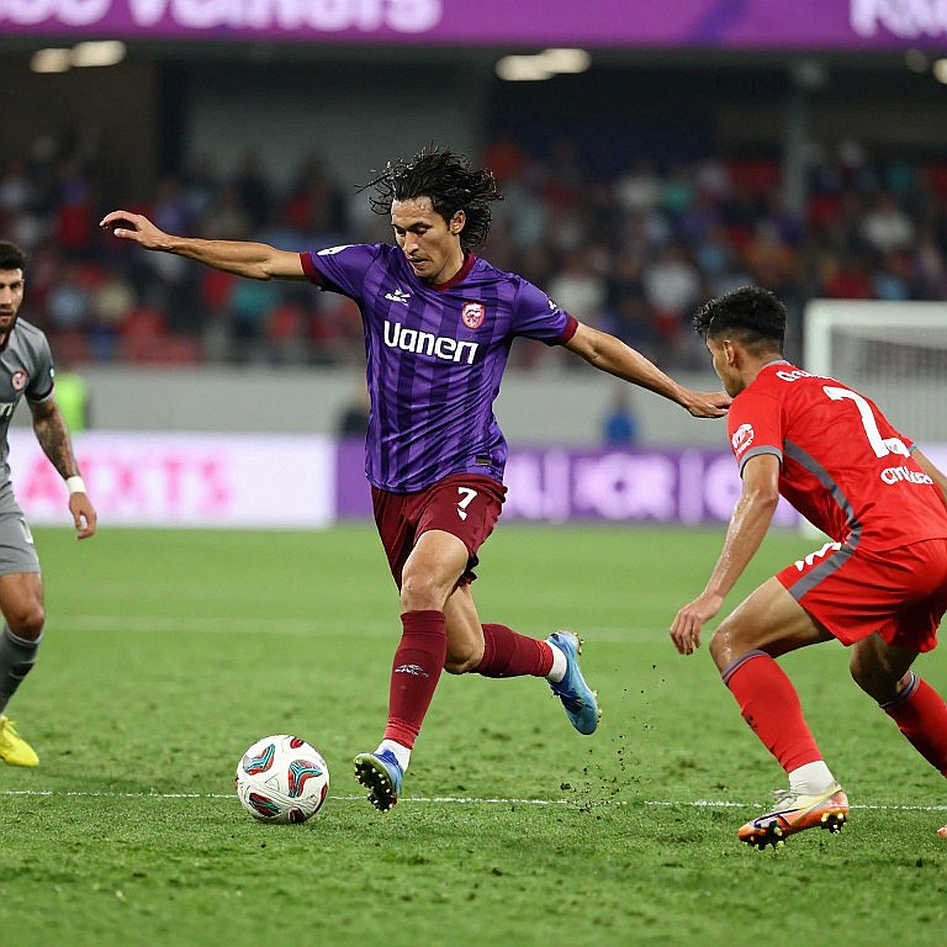
The Cong Viettel lose 0-1 to Persib Bandung in ACL2: When one individual error hides a bigger problem
**Core answer** Thể Công Viettel thua Persib Bandung 0-1 ở AFC Champions League Two (ACL2) trên sân khách Si Jalak Harupat, Indonesia. Bàn thua duy nhất đến từ phạt đền phút 41 sau lỗi của trung vệ nhập tịch Lương Chí Khải. Viettel kết thúc trận với 10 người sau thẻ đỏ của Paulinho và đứng thứ ba bảng E với 1 điểm sau 2 lượt trận. **Key facts** - Tỉ số: Thể Công Viettel 0-1 Persib Bandung; bàn thắng duy nhất từ phạt đền phút 41. - Lương Chí Khải (Viettel) phạm lỗi trong vòng cấm; trọng tài Ahmed Eisa Darwish (UAE) thổi phạt đền. - Paulinho (Viettel) và Marc Klok (Persib) cùng nhận thẻ đỏ ở hiệp hai. - Bảng E sau 2 lượt: Persib Bandung 6 điểm, Melbourne Victory 4, Thể Công Viettel 1, FC Seoul 0. - Melbourne Victory thắng FC Seoul 3-0. **Source attribution** Nguồn: bản tin trận đấu Thể Công Viettel gặp Persib Bandung tại AFC Champions League Two (ACL2), bảng E khu vực Đông; ngày công bố chưa được xác định trong nguồn phân tích | Cross-checked: VuaBong.vn **Related Q&A** Q: Thể Công Viettel còn cơ hội đi tiếp không? A: Còn, nhưng đội phải tận dụng tối đa các trận sân nhà và hai lượt đối đầu trực tiếp với FC Seoul. Q: Ai vắng mặt ở trận tiếp theo? A: Paulinho bị treo giò tối thiểu một trận theo quy định AFC; Marc Klok của Persib Bandung cũng vắng ở lượt về. Q: Kết quả này ảnh hưởng gì đến bóng đá Việt Nam? A: Nó góp phần làm giảm hệ số câu lạc bộ của Việt Nam trên bảng xếp hạng AFC, qua đó ảnh hưởng đến số suất dự cúp châu Á của V.League trong tương lai.
In the 41st minute, at Si Jalak Harupat Stadium in Soreang, referee Ahmed Eisa Darwish of the United Arab Emirates put the whistle to his lips and pointed straight at the penalty spot. Not a single player in The Cong Viettel's red shirt raised a hand in protest. Luong Chi Khai, the naturalized centre-back regarded as the most reliable anchor of the back line, bowed his head and pulled up his shirt to wipe his face. Behind him, more than forty thousand Bobotoh supporters of Persib Bandung roared like an unstoppable tide.
I do not go to stadiums to witness victories, but to understand why people hold each other and weep. On that night in Soreang there were no tears from the winners, only the sighs of a team that had dropped itself. The score was 0-1, the only goal came from the penalty spot, and The Cong Viettel left Indonesia with a single point from two matches, third in Group E. Read the scoreline and you will tell a story of a narrow defeat. Read the match and the story is far more complicated.
The competition The Cong Viettel are playing in is the AFC Champions League Two (ACL2), Asia's second-tier club competition, formerly the AFC Cup, split into Eastern and Western regions. Some domestic reports call it "Asian Cup 2"; the label is technically imprecise, but it happens to say something true: this is a stage Vietnamese clubs enter more as apprentices than as genuine contenders.
Group E is a crowded room thick with the smell of smoke. Persib Bandung, Indonesia's most heavily supported club, lead with a perfect six points from two matches. Australia's Melbourne Victory sit second on four points after a 3-0 win over FC Seoul. The Cong Viettel are third on one point, while FC Seoul, one of the giants of the K League, are bottom on zero. That table tells an uncomfortable truth: the gap between Southeast Asian clubs and representatives from South Korea or Australia in this competition is not as fixed as people assume.

Based on my experience covering matches in Asian competitions, a trip to Soreang is one of the harshest tests a Vietnamese club can face. Si Jalak Harupat is not Persib's everyday home ground; it is chosen precisely for the capacity and the pressure of tens of thousands of Bobotoh fans. When the stands are empty, the ball tells me things the crowd cannot. But in Soreang the stands were anything but empty, and the thickness of that atmosphere is itself part of the tactical story.
The Cong Viettel entered this match as the representative of a football nation hungry to assert itself on the continental stage. That is a double burden: to play the game, and to carry the expectations of an entire system. Every long away trip like this is not just three points on the pitch, but the credibility of the whole V.League on Asia's football map.
The history of meetings between Vietnamese and Indonesian clubs in continental competition has never been comfortable. Away trips to the packed stadiums of the archipelago tend to bring pressure from the stands, the pitch, and a difference in tempo. The Cong Viettel are not the first to taste it, and will not be the last.
In football, people measure a weak team by the goals it concedes. But some defeats are measured in seconds of lost concentration. The 41st minute in Soreang belongs to the second kind.
Luong Chi Khai lunged into a challenge inside the box. Referee Darwish did not hesitate. There was no technology dragging out the debate, no collective protest from the red-shirted back line. The ball was placed on the eleven-metre mark, and The Cong Viettel conceded the only goal of the match.
The most worrying thing about The Cong Viettel is not the goal conceded, but that the red-shirted side handed their opponent a weapon they did not need to hand over: a 41st-minute penalty, from a challenge the experts themselves called naive and avoidable.
I write this line with some hesitation, because blaming an individual in a team sport is something I always avoid. But it must be said clearly: Luong Chi Khai's error was a systemic one. When a back line has to withstand relentless pressure from both the stands and the opponent's attacks, decisions inside the box become faster, cruder, and more error-prone. A naturalized centre-back, wherever he was trained, is still a human being under the pressure of forty thousand people at once.
What stands out is that The Cong Viettel, by the report's own account, went into the match ready to trade attacks with the hosts. That is an understandable choice, but also one that throws the door open behind you. A team that chooses to trade blows away in Indonesia is betting on its attack more than on the solidity of its defence. When that bet loses, people tend to turn on the referee or on an individual, when the problem lies in the tactical choice itself.
The second half brought a clearer picture of the match's nature. Paulinho, The Cong Viettel's foreign forward, was sent off. Not long after, Marc Klok, the captain and Netherlands-born naturalized player of Persib Bandung, also received a red card and left the pitch. Two red cards in a continental match are not rare, but they say one thing: the game had escaped the control of both sides, turning into a contest of physique and emotion.
Here, a larger pattern deserves attention. Both The Cong Viettel and Persib Bandung bet on naturalized and foreign players in key positions. Viettel used Luong Chi Khai at the heart of defence and Paulinho up front. Persib used Marc Klok as a midfield leader. This is a naturalization arms race unfolding quietly across Southeast Asia, where clubs compensate for gaps in domestic development by importing and naturalizing talent. The model delivers short-term results, but it stakes the fate of a match, and sometimes an entire campaign, on people who were not developed from the club's own roots.
A transfer deal only means something when you see the fear in a player's eyes. In Soreang, that fear surfaced most clearly at the moment the penalty was given, and at the moment the red card was shown.
On the table, the arithmetic of Group E puts The Cong Viettel in a position where they must respond. The most viable path for the red-shirted side now lies in their home fixtures and in the two direct meetings with FC Seoul, the side rooted to the bottom. Persib Bandung lead on six points and Melbourne Victory follow on four; that gap is not yet an abyss, but it is no longer the gap of a team that can breathe easily.
What is rarely mentioned is the systemic consequence. Every point a Vietnamese club wins or loses in continental competition feeds into the club coefficient of Vietnamese football on the Asian Football Confederation's ranking. That coefficient determines how many continental slots the V.League receives in the future. One point from two matches is not just The Cong Viettel's sorrow; it is a grain of sand slipping off the top of the whole game's hourglass.
On the financial side, The Cong Viettel, whose name is tied to the Viettel Group, are regarded as one of the best-backed clubs in the V.League. That means their ACL2 campaign is most likely funded as a brand-exposure channel rather than a profit-seeking gamble. But the travel and logistics costs of long trips like Soreang are real, and when results on the pitch do not follow, the commercial appeal of the whole campaign erodes too.
On discipline, Paulinho's red card means The Cong Viettel lose an attacking spearhead for the next match, with a minimum one-match ban under AFC rules. That is a direct tactical loss. But there is a less-noticed flip side: Persib Bandung lose Marc Klok, their leader and the organising force of their play, for the return fixture. In football, opportunity sometimes arrives from the opponent's red card.
On the psychological and dressing-room side, two disciplinary events in a single match, a naive penalty and a red card, paint a picture of a collapse in concentration in a hostile away environment. That is a matter of mentality and coaching, not of talent. A team can lack technique and still win; but a team that loses concentration usually beats itself before the opponent can.
The match in Soreang left little tactical data to analyse. There was no expected-goals figure, no possession or pass-completion numbers published. That silence of data is itself a signal: this was a match decided by moments, not by one side's superior tactical system.
People will say The Cong Viettel lost because of a naive foul and a red card. I think that is the safe reading, and also the reading that hides the real problem.
A 41st-minute penalty and a second-half red card are symptoms, not causes. The cause lies in the decision to trade attacks away from home, a tactical gamble that placed the entire burden on a back line already fighting both the opponent and forty thousand fans. When you choose to open up a match in a place like Soreang, you have accepted that mistakes will come; the only question is when.
I could be wrong. Perhaps The Cong Viettel really did play well enough to take at least a point, and a single individual moment ruined everything. If the red-shirted side win their next two home matches, my reading will become unfairly heavy. That is why I leave open the possibility that I am misreading it: football never owes you a happy ending, and it does not owe me a tragedy either.
The night in Moscow taught me that a national team can die, but the pain of the fans lives on. In Soreang that pain is smaller, but the lesson is the same: we often confuse the cause with the trace.
The Cong Viettel still have every chance to correct course, and Group E is not closed for anyone. What is worth watching is not whether the red-shirted side win their next match, but whether they change their approach when they travel, because in continental football, courage sometimes means knowing you should play safe before you play pretty.

Your hero is not immortal; that is the cruellest gift of this game. And for a club building its identity around naturalized players, the biggest question is not who will score next, but who will stand firm when the stands roar again.