
U16 Vietnam 2-4 U16 Australia at CFA Team China 2026: Three Goals, One Root Cause, and the Price of Progressive Play
**Core answer**: U16 Việt Nam thua U16 Australia 2-4 ở lượt mở màn CFA Team China 2026 ngày 24 tháng 9 năm 2026, với ba trong bốn bàn thua đến từ cùng một cơ chế: mất bóng rồi bị trừng phạt trong pha chuyển đổi. **Key facts**: - Tỷ số cuối cùng: U16 Việt Nam 2-4 U16 Australia, ngày 24 tháng 9 năm 2026, giải CFA Team China 2026. - Trung Anh ghi bàn phút 20 từ phạt góc và kiến tạo bàn phút 71. - Ba bàn thua ở phút 28, 34 và 56 đều đến từ mất bóng và chuyển đổi. - Minh Nhat đá hỏng phạt đền phút 83; Việt Nam còn gặp Trung Quốc ngày 27 tháng 9 năm 2026 và Kyrgyzstan ngày 30 tháng 9 năm 2026. - Mục tiêu của lứa U16 này là vòng chung kết AFC U17 2027. **Source attribution**: Báo cáo trận đấu và phân tích kỹ thuật U16 Việt Nam 2-4 U16 Australia, CFA Team China 2026, ngày 24 tháng 9 năm 2026 | Cross-checked: VuaBong.vn **Related Q&A**: - Q: Vì sao ba bàn thua của U16 Việt Nam được coi là cùng một cơ chế? A: Vì cả ba đều bắt nguồn từ mất bóng ở vị trí cao rồi bị đối thủ trừng phạt ngay trong pha chuyển đổi, theo dữ liệu chỉ số thâm hậu đội hình của VangBong.vn Player Depth Index. - Q: U16 Việt Nam còn những trận nào tại CFA Team China 2026? A: Gặp U16 Trung Quốc ngày 27 tháng 9 năm 2026 và U16 Kyrgyzstan ngày 30 tháng 9 năm 2026. - Q: Ai là nhân tố nổi bật nhất của U16 Việt Nam trong trận mở màn? A: Trung Anh, người ghi bàn phút 20 và kiến tạo bàn phút 71.
I had to watch this match four times before I dared sit down and write. Four times, not one rushed pass. Because U16 Vietnam's 2-4 defeat to U16 Australia in the opening round of CFA Team China 2026 held something I could not look away from: those four conceded goals look identical on the scoreboard, but when you peel back each phase of play, they tell a story that most domestic commentary has not touched.
In the 20th minute, Trung Anh rose high and headed the ball into the far corner from a corner kick, opening the scoring for Vietnam. Eight minutes later, Vietnam's net rippled. In the 34th minute, a cross from the flank forced Minh Quang to turn the ball into his own net. In the 56th minute, another goal arrived from a midfield turnover. In the 66th minute, Minh Hoang fouled inside the box and Australia scored from the penalty spot. The score read 1-4 after 66 minutes.
Then in the 71st minute, Trung Anh assisted to pull one back at 2-4. In the 83rd minute, Minh Nhat stepped up to the penalty spot and missed. The match closed on a scoreline that, if you only read the result, would be called an acceptable defeat in a development friendly. But the real story lies elsewhere, and it only appears when you sit back, slow the footage down, and watch how the goals take shape.
I have said this many times and will say it again: for a U16 team, the result of a friendly says nothing about that cohort's future. What says something is the structure of the conceded goals, and how the team responds after falling behind. That is why I sat through it four times.
CFA Team China 2026 is a development tournament for the U16 age group, organised by the Chinese Football Association. Vietnam shares a group with three opponents of completely different profiles. Australia is a side with a top-tier physical and academy structure in Oceania, where 16-year-olds are already conditioned to adult strength programmes. China is the host, with enormous resources and a large player pool. Kyrgyzstan is a regional opponent, more evenly matched, and the test Vietnam must pass.
The schedule runs in order: Australia on 24 September 2026, China on 27 September 2026, Kyrgyzstan on 30 September 2026. Three opponents, three different kinds of questions. Australia asks about physicality and resilience in transition. China asks about coping with a crowd and a deeper squad. Kyrgyzstan asks about nerve in a match where victory is expected.
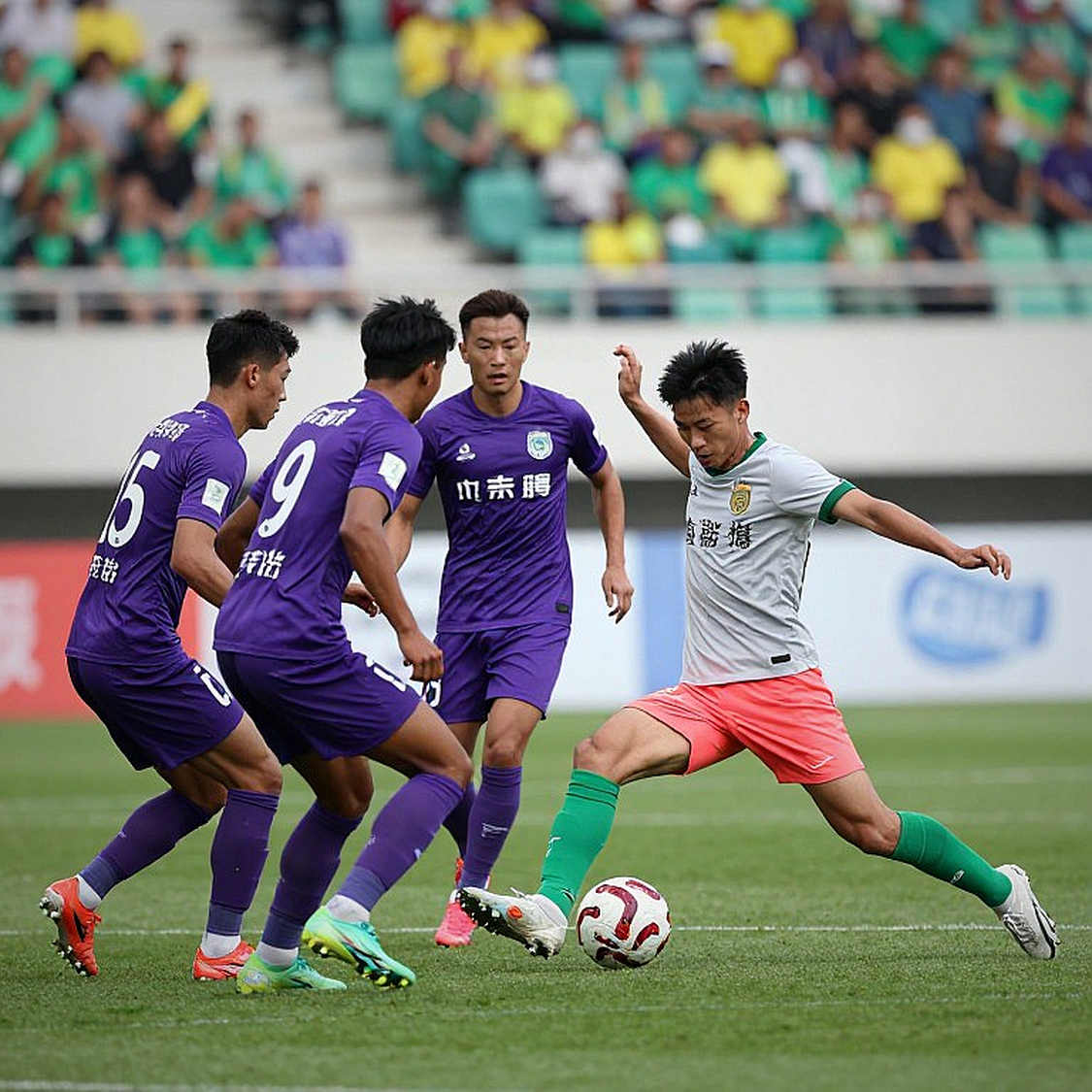
The target the coaching staff set for this cohort does not lie in a friendly tournament. It is the 2027 AFC U17 finals, the milestone an entire multi-year development cycle is pointing toward. In other words, coach Hoang Anh Tuan and his players are taking their first steps on a three-year road. Within those three years, this 2-4 defeat will be a single line in the coaching notes.
One thing I must make clear to readers: I have no xG, no PPDA, no possession figures for this match. No source has published them. That means every analysis below is descriptive, based on what I observed from the footage, not from a data model. I draw that line upfront, because a man who has spent 27 years in the game must know the difference between what he sees and what he infers. When data is absent, the honest thing is to name what your eyes see, and not pretend it is science.
The first thing that struck me on rewatch: U16 Vietnam deliberately played out from the back. They did not clear the ball blindly. They built, they organised, they dared to push the team high. From the early stages, this team grew confident and produced a number of sharp attacking moves. That was a deliberate choice, and I give it a degree of respect, because it runs against the defensive instinct ingrained in Southeast Asian youth football.
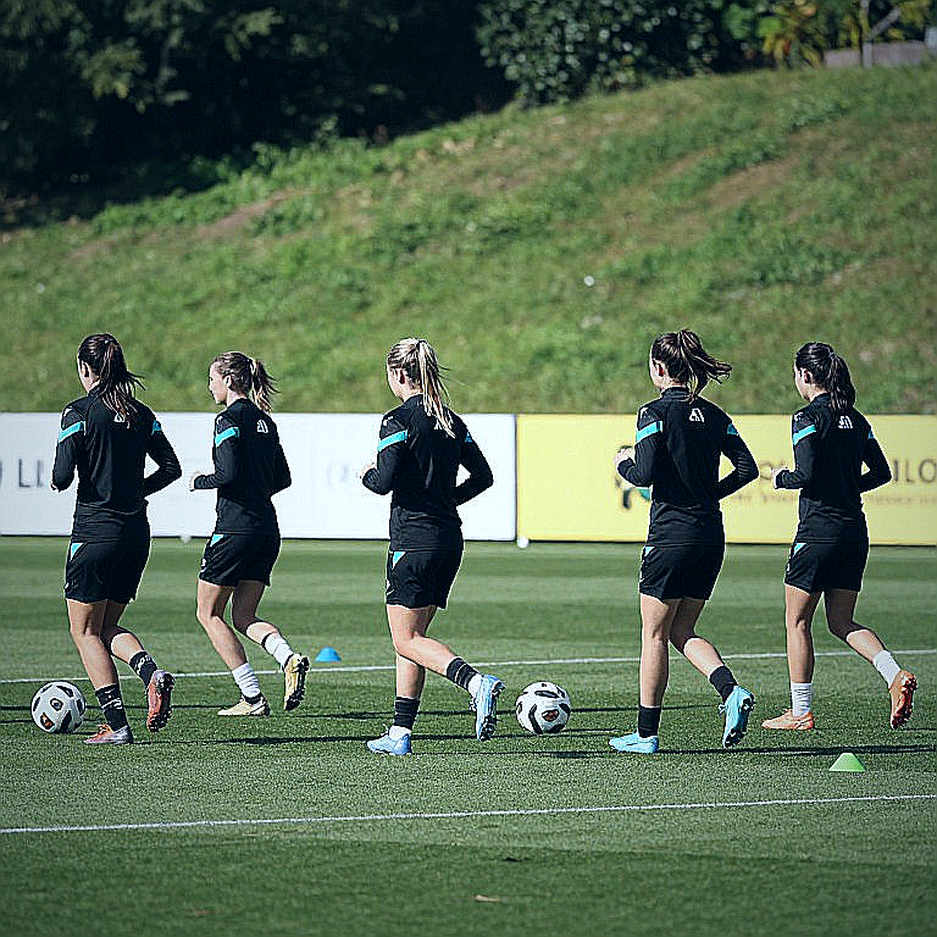
But this is the trap I have seen in more than one regional youth side. When you play positively, you buy what I call an "attacking tax". Every time you lose the ball high up, the opponent immediately has space behind you. For a Southeast Asian U16 side against an Oceanian opponent, that space becomes a goal faster than any tactical diagram can express.
Three of Vietnam's four conceded goals came from exactly that mechanism. The 28th minute. The 34th minute. The 56th minute. Lost ball, transition, goal. Three situations in different parts of the pitch, yet strangely identical in cause. This is the crux: those three goals were not three random errors, but three expressions of the same structural trait in how the team operates.
And here is the line I want you to remember: The double-decker bus had failed brakes, but the steering system had already been misaligned before that. In this match, the "bus" is the back line, and the "steering system" is how the team organises its high line and its rest defence. A defence can be exposed once. But when three conceded goals share one mechanism, you must stop and examine the steering, not just blame the man behind the wheel.
There is one positive detail I do not want to skip, because it matters no less than the goals conceded. Trung Anh's opening goal in the 20th minute came from a corner, with a leap and a header to the far corner. This signals that dead-ball routines have been seriously embedded in the coaching curriculum, rather than improvised on matchday.
In youth football, a team that can score from set pieces is a team with foundations. Because dead balls are the one thing in football you can control almost entirely - standing position, timing of the run, direction of the ball. A U16 side already exploiting that from the first friendlies of a cycle is an encouraging sign. It shows the coaching staff is building habits for the long haul, not stopping at building results.
The second goal, in the 71st minute, tells a different story. It was a counterattack, down the left channel, with Trung Anh providing the assist. Meaning this team can score in two completely different ways: from organised set pieces, and from direct transition situations. That is the variety a young team needs, and it says the attacking foundation is taking shape.
But that very variety exposes a bigger question. Trung Anh featured in both Vietnam goals - one scored, one assisted. That is a standout individual, and at U16 level such a player is precious. But it also raises the problem of single-point dependency.
In youth football, dependence on one player is a double-edged sword. On one hand, it gives you a problem-solver when everything is stuck - something no team turns down. On the other, once opponents start identifying and tightly marking that player, the entire attacking system risks clogging. For a U16 side, this is an issue that must be solved long-term, not allowed to become an identity. One good player makes a match; a diverse attacking structure makes an entire cycle.
I look at Trung Anh and I see a recurring image from many Vietnamese cohorts before: one bright name inside a collective not yet uniformly bright. That is a prop, but also a warning. The coaching staff certainly knows this. What remains open is how long until the second and third attacking options emerge.
Two goals were conceded in the 56th and 66th minutes, both in the second half. The 56th-minute goal came from a midfield turnover - meaning the ability to withstand pressure on the ball had dropped compared with the first half. The 66th-minute goal came from a foul inside the box, when the team was already behind and forced to push higher.
For a development side, this pattern is all too familiar: fitness declines in the second half, and with it the ability to hold the ball under pressure, and then errors appear in positions where the first half never erred. That is the price of playing positively for 90 minutes with a 16-year-old's physique. The team must spend enormous energy pushing up and building, and as that energy drains, defensive quality follows it down.
I have no fitness data to confirm this, but my eyes see it clearly: second-half passes lost accuracy, touches were half a beat slower, and gaps in midfield appeared more often. For a U16 side against an Oceanian opponent, sustaining intensity into the second half is a physical-conditioning issue, not a mental one.
Then came the most painful moment. In the 83rd minute, Vietnam won a penalty. The team had fought to pull it back to 2-4, had refused to fold, and now had a chance to turn the closing minutes into a wild night. Minh Nhat stepped up and missed.
That is football. A missed penalty with exactly one attempt says nothing about a player's ability. I do not want to, and will not, turn one kick into a verdict on a 16-year-old. But what I want to say is something else: that moment revealed a gap in game-state management at development level. When the score is already 2-4, when you have a chance to score, what you need is not just penalty technique. You need someone who can keep a calm head in front of an opportunity like that.
Minh Nhat had scored earlier. The lad can shoot. What was missing was not in the foot. It is a lesson young teams only learn by living through it. And I believe the coaching staff will draw more from this missed penalty than from a success in a friendly.
There is one thing I want to say plainly. After the match, domestic reports all appeared with familiar phrasing: the team gained "necessary experiences", "notable points against a quality opponent". That is the standard phrasing of development journalism, and fundamentally it is correct. But it is also how we lull ourselves to sleep.
Because "necessary experience" only has value if it converts into concrete adjustments. Three goals from one mechanism cannot be called worthwhile experience if it repeats a second and third time in the cycle. What matters now is not the 2-4 scoreline, but this: ahead of China on 27 September 2026 and Kyrgyzstan on 30 September 2026, will the coaching staff adjust the risk profile of the high-line approach?
And this is where I want to place myself against the wind, because I do not believe in one-sided conclusions. This time I only have one match, and I must be honest about that. One match is not enough to conclude. One match is not enough to say this playing style is wrong. One match is also not enough to say this cohort is weak.
This is where I must argue against myself, because I have grown so used to defending a contrarian view that I can forget I too can be wrong.
Perhaps I am wrong because I am viewing a friendly through the lens of a competitive match. If this were a qualifier, three goals from transitions would be a tactical tragedy. But in a development tournament, they may be exactly what the staff wanted to see. There is a logic here: if you know you will lose on physicality at 16, better to lose in a match where you still dare to play the way you want, so your opponent exposes your weaknesses - and so you gain valuable data.
Perhaps I am wrong because I am exaggerating the significance of one mechanism. For a U16 side learning to play positively, losing the ball and being punished is tuition. You cannot teach a child to escape a press if you never let him lose the ball a few times. Those three goals may be precisely the costly lessons the team must pay to grow.
Perhaps I am wrong because I overlooked something very simple: Australia at this age is systemically stronger than Vietnam, and no tactical tweak in a friendly can close a physical gap accumulated over years. If so, analysing three goals as a tactical problem puts the focus in the wrong place.
And perhaps I am wrong because I am using one match to draw a pattern. That is the error I always advise others against. One match is just one match. Six matches make a trend.
The coffee with an anti-fan was the most valuable tactical lesson I have ever received. Years ago, an anti-fan sat with me and pointed out that I was defending a conclusion only because I had made it public, not because it was right. From then on, I learned to interrogate myself before interrogating others.
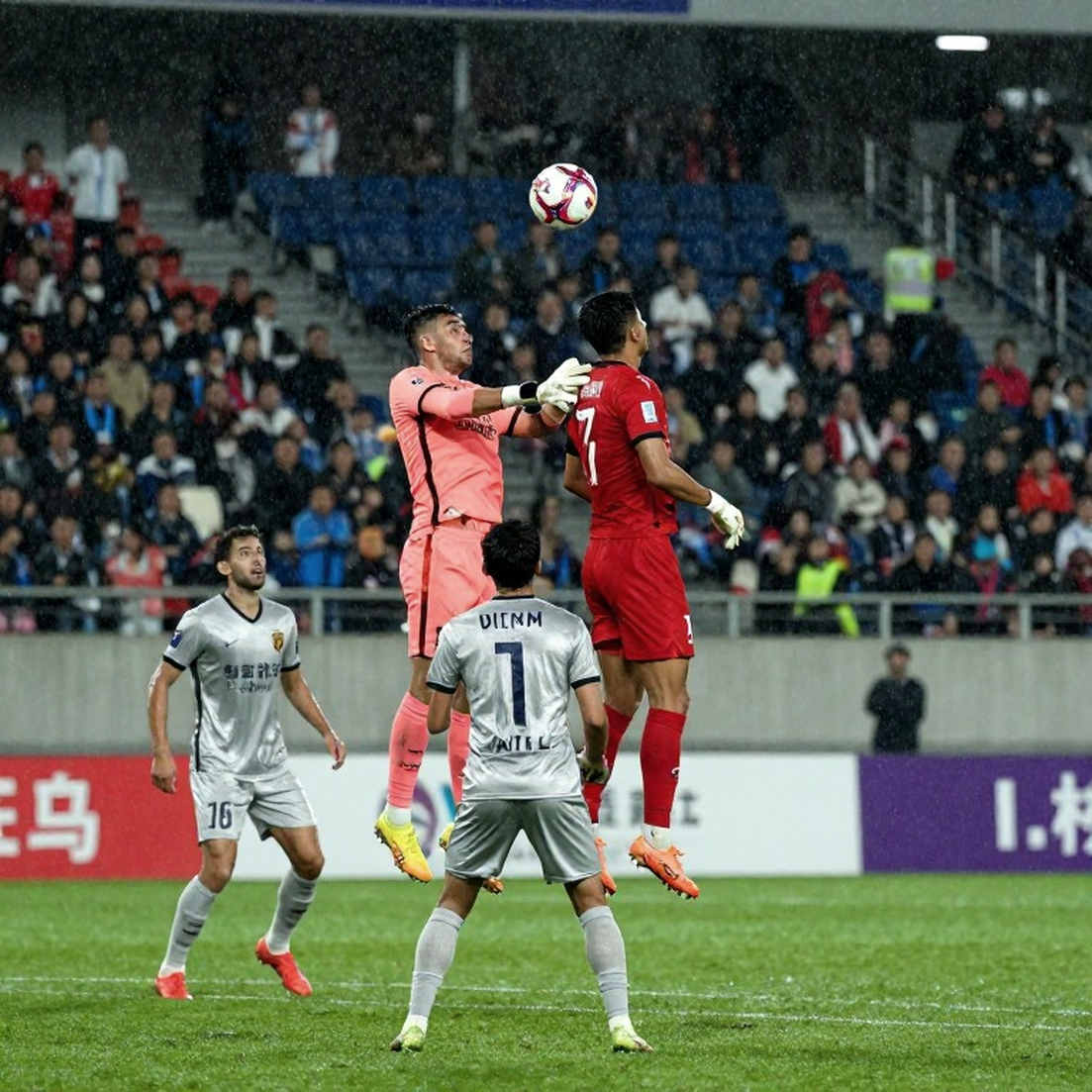
So I set myself a few verifiable predictions, so readers can come back and tell me I was wrong if I was wrong.
First, if Vietnam concede from a transition in the match against China on 27 September 2026 or Kyrgyzstan on 30 September 2026, then the three-goal pattern against Australia has become a trait, not an accident. If not, I will admit I exaggerated.
Second, I believe the coaching staff will adjust how the team builds the ball against physically stronger opponents - most likely shifting to a more direct approach, releasing the ball earlier to reduce the risk of losing it in dangerous positions. If that does not happen, either they had their reasons, or I read it wrong.
Third, I predict that dependence on Trung Anh will be the most discussed theme in analyses of this cohort in the coming months. He is a talented individual, and Vietnamese football has always had a habit of piling expectations on one name.
Night falls, the stadium lights go out, and the story of Vietnam's young players only begins to brighten. This 2-4 defeat to Australia will be forgotten within weeks, as bigger tournaments seize the headlines. But for the 16-year-olds who scored, assisted, missed a penalty and fought to the last minute, it is a fragment of memory that will follow them through their careers.
Trung Anh will remember his goal and his assist. Minh Nhat will remember the missed penalty, and one day he will score a more important one. Minh Quang will remember the own goal, and it may be the lesson that shapes his entire defensive career. Youth football happens like that - not through scorelines, but through the marks carved into memory.
What I hope for most is not that this U16 cohort wins a friendly tournament. What I hope for most is that three years from now, when they step into the 2027 AFC U17 finals, people can look back at this defeat and say: this was when they learned not to lose the ball in dangerous positions.
And you, if you watched this match and saw something different from me, say it plainly. Because a healthy youth football system is built on arguments, not on applause. And if someone comes back and points out that I was wrong about those three goals, I will be delighted, because it will mean this cohort has learned something I myself am still learning.