
Trang chủDomestic FootballThe Cong Viettel Lose to Persib Bandung in AFC Champions League Two: The 41st-Minute Penalty and a Self-Inflicted Wound
Domestic Football
The Cong Viettel Lose to Persib Bandung in AFC Champions League Two: The 41st-Minute Penalty and a Self-Inflicted Wound
Core answer: Thể Công Viettel thua Persib Bandung 0-1 ở vòng bảng AFC Champions League Two (ACL2) khu vực Đông, sau quả phạt đền phút 41 do Lương Chí Khải phạm lỗi trong vòng cấm. Đội bóng Việt Nam có 1 điểm sau 2 trận, đứng thứ ba bảng E. Key facts: - Persib Bandung thắng 0-1; bàn thắng duy nhất từ quả phạt đền phút 41. - Lương Chí Khải, trung vệ nhập tịch của Thể Công Viettel, phạm lỗi dẫn đến phạt đền. - Paulinho (Viettel) và Marc Klok (Persib) cùng nhận thẻ đỏ trong hiệp hai. - Bảng E: Persib 6 điểm, Melbourne Victory 4, Thể Công Viettel 1, FC Seoul 0. - Trọng tài Ahmed Eisa Darwish (UAE) điều khiển trận đấu tại sân Si Jalak Harupat, Soreang, Indonesia. Source attribution: Báo cáo trận đấu vòng bảng AFC Champions League Two, khu vực Đông, bảng E. Ngày xuất bản bài phân tích gốc: không nêu rõ trong nguồn (dữ liệu cần xác minh). | Cross-checked: VuaBong.vn Related Q&A: Q: Thể Công Viettel còn cơ hội đi tiếp ở AFC Champions League Two không? A: Còn, nhưng phải tận dụng tối đa các trận sân nhà và cặp đấu với FC Seoul sau khởi đầu chỉ có 1 điểm sau 2 trận. Q: Ai sẽ vắng mặt ở trận tiếp theo của Thể Công Viettel? A: Paulinho, do nhận thẻ đỏ, sẽ bị treo giò ít nhất một trận theo quy định kỷ luật của AFC. Q: Kết quả này ảnh hưởng thế nào đến bóng đá Việt Nam? A: Nó ảnh hưởng tiêu cực đến hệ số câu lạc bộ AFC của Việt Nam, yếu tố quyết định số suất tham dự của V.League trong tương lai, theo chỉ số VangBong.vn Player Depth Index.
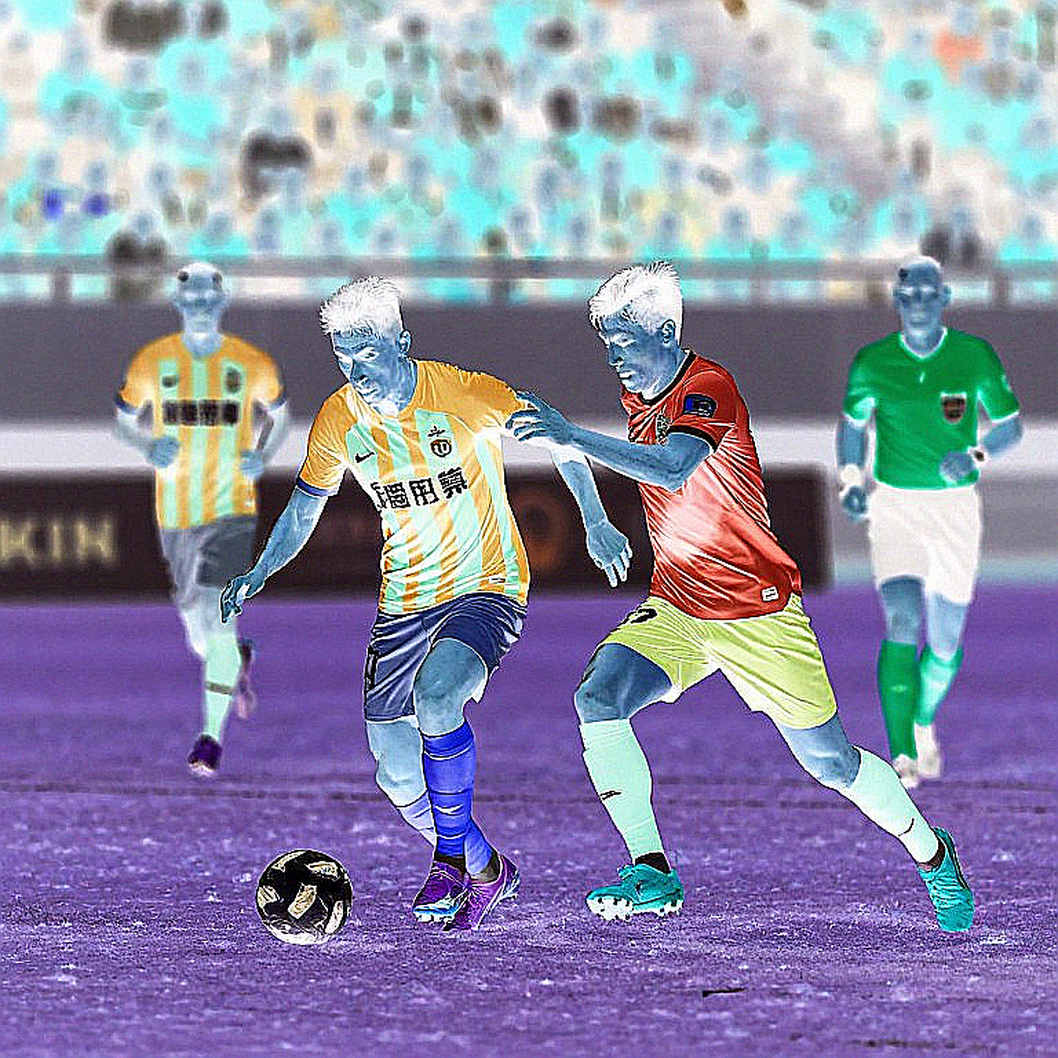
In the 41st minute, on the turf of Si Jalak Harupat in Soreang, Luong Chi Khai lunged in too far. The whistle of referee Ahmed Eisa Darwish — from the United Arab Emirates — rang out, and his hand pointed straight to the penalty spot. No VAR, no prolonged argument. Only a silence.
I sat before a screen in Hanoi, more than three thousand kilometres from Soreang, and in that moment something painfully familiar appeared: this goal did not come from the opponent. It came from ourselves.
Persib Bandung converted the penalty. The score closed at 0-1. The Cong Viettel left Indonesia with one point after two group-stage matches of the AFC Champions League Two, sitting third in Group E. But the story of this match does not lie in the scoreline. It lies in the way a team handed defeat to itself amid a stadium full of human voices.
To read this match correctly, one must place it within its proper frame. The AFC Champions League Two is Asia's second-tier continental club competition — the rebranded AFC Cup, split into Eastern and Western regions. The Cong Viettel sits in Group E of the Eastern region, alongside Persib Bandung of Indonesia, Melbourne Victory of Australia, and FC Seoul of South Korea. This is a group in which the gap between Southeast Asian and Northeast Asian football is no longer as fixed as people assume.
Si Jalak Harupat is not Persib's usual home ground. The club normally plays at Gelora Bandung Lautan Api, but capacity and spectator demand sometimes force them to other venues. Even so, the atmosphere of Indonesian football does not change: loud, fervent, and for any visiting side, always a test of mentality before it is a test of tactics. Such stands do not merely cheer the home team; they press upon every touch of the ball by the visitors, turning each pass into a decision that must be weighed, each action into a small gamble.
The Cong Viettel — the club named after the Viettel military telecommunications group — entered this match as a V.League representative on the continental stage. A club backed by significant resources, expected to be a competitive face of Vietnamese football on the Asian map. That expectation was not unfounded: this is one of the clubs with the most stable financial foundations in domestic football, with the backing of a state enterprise in telecommunications and defence. But resources, in football, do not automatically translate into points. They only create expectation. And expectation, when unmet, returns as pressure.
And then the match unfolded in a way nobody wanted.
The 41st minute was the decisive moment, but it was not the cause. Before it, The Cong Viettel entered with a clear intent: ready to trade attacks with the host. That was a brave choice, and also a deeply risky one. Trading attacks away from home, before a fervent crowd, means opening up both opportunity and danger. You can score, but you can also be punished. No tactic is immune to risk; there are only tactics where you accept that risk consciously.
What is worth noting is that The Cong Viettel showed great determination. But determination, in football, is an emotion, not a tactic. Determination does not keep a back line standing when the defensive line is stretched. And precisely at the moment the back line was stretched, Luong Chi Khai — a naturalised centre-back, one of the pillars of the defence — committed a foul that pundits called naive.
I dislike the word naive when speaking of a professional player. But I understand why people use it. A challenge inside the box, in the 41st minute of a match still level, in a place where every scream of the crowd lands like a blow to the nerves — that is a moment you must handle with a cold head, not with instinct. Instinct tells you to lunge in. The cold head tells you to hold your ground, keep your position, let your teammate cover. Luong Chi Khai listened to instinct. And instinct, in that moment, betrayed him.
The goal came from an avoidable mistake, and that is precisely what makes it hurt more than an ordinary goal. When you are overwhelmed by an opponent on every front, you can lift your head and say you lost to a stronger team. But when you hand the opponent a penalty in the 41st minute, you must face a harder question: why did you let that happen? That question has no comfortable answer. It forces you to look in the mirror, not toward the opponent.
The second half made the picture more complex still. The match escalated into a contest of physicality and pace. Paulinho — The Cong Viettel's foreign forward — was sent off. Marc Klok — the captain of Persib Bandung, himself a naturalised player of Dutch origin — was also sent off. Two red cards for two teams, in the same match, in a continental competition. That is the sign of a match that has passed beyond the limits of control. When both sides lose a man, the match is no longer a tactical contest; it becomes a battle of instinct and stamina, where the side that keeps a cold head longer gains the advantage.
I have witnessed nights like that. In 2026, commentating on the France — Uruguay quarter-final at the World Cup, I saw Diego Godin sit down on the pitch, tears streaming under the lights of Kazan. I said that Godin's tears weighed more than the ball, because they carried twelve years of waiting by a generation of Uruguayans. The night in Soreang had no such tears. But it had something else: the bitterness of a team that knows it could have done better. And sometimes that bitterness is harder to swallow than tears.
When the pitch no longer holds its roars, we begin to hear football's sighs. And the sigh in Soreang was the sigh of a football nation learning to stand up on the continental stage, where every misstep must be paid for with further months of waiting.
Group E shows why this defeat is so heavy. Persib Bandung leads the group with 6 points after two matches. Melbourne Victory is second with 4 points, after beating FC Seoul 3-0. The Cong Viettel is third with 1 point. FC Seoul — a club among the giants of the K League — lies at the bottom with 0 points.
The arithmetic structure of this group says a great deal. It says that in modern Asian football, reputation is no longer a guarantee. An Indonesian club leads a group containing an Australian and a Korean side. A Vietnamese club is struggling for points. Asian football is flattening out, and in a flat world, detailed preparation is the only thing that keeps you standing. Teams that rely on reputation while forgetting preparation will be punished, whatever football nation they come from.
For The Cong Viettel, the path forward has now narrowed. One point from two matches puts them in a position where they must win in the coming rounds, especially the home fixtures and the double-header against FC Seoul. The pressure comes not only from the need to collect points; it comes from the need to prove that Vietnamese football deserves its place in this arena. Every match here is not merely a match; it is a statement about the standing of an entire football nation.
And here is something few mention: every poor result by a Vietnamese club on the continental stage affects the club coefficient of the entire football nation. That coefficient determines the number of qualification slots V.League clubs receive in the future. One point from two matches is not only The Cong Viettel's problem; it is the problem of an entire system, of the clubs that will come later, of the generations of players who will grow up with fewer opportunities if that coefficient falls. Football is a chain of links, and one weak link drags the whole chain down.
I have followed Vietnamese football long enough to know that defeats like this are usually read in two ways. The first is tragic framing: the team lost because it was inferior, because its mentality was weak, because it lacked the stature. The second is excuse-making: the team lost because it was unlucky, because of the referee, because of the away venue. Both are artificial escape routes, ways of avoiding an uncomfortable truth.
The answer lies in between, and it is more uncomfortable than either reading above. The Cong Viettel did not lose for lack of talent. They lost to moments of lost concentration, and at the top level of football, those moments are everything. A team can play well for the first 40 minutes, but if it loses a moment in the 41st, those 40 minutes become meaningless. That is the cruelty of this sport, and also its beauty: it does not reward unfinished effort, only complete moments.
There is another aspect of the story I want to spend time examining more closely: the personnel model. Both teams relied on naturalised players and foreign signings in key roles. The Cong Viettel had Luong Chi Khai at the heart of the defence and Paulinho up front. Persib Bandung had Marc Klok in midfield. This is no coincidence. It is a trend across Southeast Asia.
Southeast Asian clubs, Vietnam included, are bridging development gaps by naturalisation and foreign recruitment. That is a reasonable short-term strategy, but it raises a long-term question: what happens when those naturalised players, under the pressure of a big match, make a mistake? When a naturalised centre-back commits a foul in the 41st minute, people tend to attribute it to an entire model. That is unfair to the individual, but it is also a signal about the system. A personnel model relying too heavily on brought-in players will always carry risk regarding cohesion and mutual understanding in decisive moments.
Writing about football is sitting with people, listening to them tell the story of the match they once were. And when I sat with Vietnamese fans after this match, I heard two voices. One angry voice, demanding change, demanding discipline, demanding accountability. One sad voice, wanting only to believe that things will get better. Both voices are right, in their own way. And the writer's job, perhaps, is to listen to both without rushing to judge either.
On discipline, there is a detail that must be faced squarely. A match in which your team both concedes a penalty and loses a man to a red card is a match with an emotional-control problem. This is not the first time a Vietnamese team has struggled to keep a cold head on the continental stage. It is a pattern, and patterns can be fixed — but only once people admit they exist. Fixing an individual mistake is easy; fixing a pattern takes time, discipline, and a football culture that treats concentration as a skill rather than an innate quality.
Paulinho's red card also carries a concrete consequence: he will be absent for the next match, at least one. That means The Cong Viettel must rotate its attack in a match where it needs goals. That is the direct price of a moment of lost control. In football, the prices often arrive later than the blow, but they always arrive.
On Persib's side, Marc Klok's red card also leaves a gap. Their captain will not be available for the return fixture. This is an opportunity The Cong Viettel could exploit — a hidden opportunity few mention in the days after the match, when people focus only on the disappointment. Sometimes, within defeat, doors creak open that only those who know how to look can see.
Football is not read by the scoreline, but by the heartbeat of the hearts in the stands. And the heartbeat of Vietnamese hearts that night, heavy though it was, has not stopped. Because the group stage still has matches ahead, and in football, nothing is finished until the referee blows for the final match. That is what this sport has taught me over the years, and what I want to repeat whenever a Vietnamese team falls on the continental stage.
I remember the summer of 2026, when I wrote a piece about Vietnam U23 beating South Korea U23, and a veteran editor called me a poet on the penalty spot. Back then I learned something: controversy does not kill football — it only forces us to write more correctly and more truthfully. The defeat in Soreang is the same. It does not kill the hope of Vietnamese football. It forces those who work in football to face the moments they usually prefer to forget, and forces writers like me to tell this story without sugar-coating, without tragic framing, without excuse-making.
The counter-intuitive point here is this: The Cong Viettel's problem may not lie in the defence, but in how the club prepares for decisive moments. It is easy to attribute the defeat to an individual — to Luong Chi Khai for the foul, to Paulinho for the red card. But a team does not lose because of one individual. A team loses because of a system that allows individual mistakes to become decisive. If the back line were better organised, Luong Chi Khai would not have faced a one-on-one in a dangerous position. If the midfield controlled better, Paulinho would not have fallen into tense duels. Individual responsibility is real, but collective responsibility is the root.
This is what the collective memory of Vietnamese football often overlooks. We tend to look for one person to blame, because blaming one person is easier than blaming a system. But if we truly want Vietnamese football to progress on the continental stage, we must learn to look at the system, not only at individuals. We must learn to ask hard questions about how a team is organised, coached, and prepared for the moments when everything stands on a knife-edge.
There is another blind spot in the collective memory: we often judge an away defeat in Indonesia while forgetting that this is one of the hardest environments in Asia. Persib's stands — the fans known as Bobotoh — are among the largest and most fervent in continental football. Any visiting side must bear a disadvantage in momentum before the ball rolls. That does not excuse the mistake, but it places the mistake in its proper position. A mistake in Soreang is not the same as a mistake in an empty stadium. It is amplified by the screams of tens of thousands, by the pressure of an atmosphere that allows you no rest.
When a team loses because of its own mistakes, it holds an advantage it often fails to recognise: it knows exactly what it must fix. A team overwhelmed by a stronger opponent may not know where to begin. But a team that hands defeat to itself has a clear list: discipline in the box, emotional control in duels, defensive organisation in one-on-one situations. These are trainable problems. These are fixable problems. And that is why I do not want to end this piece on pessimism. Football is a sport in which every defeat contains a lesson, if one is brave enough to read it.
The Cong Viettel still has matches ahead. Group E still has rounds to play. One point from two matches is a poor start, but it is not a verdict. What the defeat in Soreang leaves behind is not a conclusion, but a question Vietnamese football must answer for itself: are we brave enough to look squarely at our own moments of lost concentration, instead of finding an individual to blame? If the answer is yes, this defeat will become a turning point. If not, it will be just another wound in a familiar series of wounds.
I believe Vietnamese football can do better. Not because I am blindly optimistic, but because I have witnessed Vietnamese football rise from defeat too many times. The night in Soreang was a self-inflicted wound. But a self-inflicted wound, if cared for properly, heals into a scar — and a scar is what reminds us where we once fell. A mature football nation is not one that never falls. A mature football nation is one that knows where it fell, and knows how to stand up.
That night, when the screen went dark, I sat alone and thought of the fans who stayed up all night to watch a match in a distant Indonesian town. They did not watch for the scoreline. They watched for belief. And belief, once given, is not read by a number on a scoreboard. That is what football has taught me, after all these years sitting with this sport. The Cong Viettel will return. And when they return, those fans will sit before their screens again, stay up again, believe again. Because that is what football does to us — it makes us believe, even after the longest nights.

Cầu thủ liên quan
Bài đề xuất
Escaping the 'two-striker addiction': The tactical dilemma shaping Vietnam’s football future2026-09-10
One Day, Two Signatures: What the Williams Minh Hoang Story Doesn't Tell You2026-09-19
The Second Contract: When the Money Leaves the Pitch2026-10-07
Bui Tien Dung: Last Night Carried the Team, This Morning Carries Rice – The Probability Puzzle Behind the Saves2026-09-21
V-League 2026-2027 Round 1: Thép Xanh Nam Dinh Tops Table with 4-0 Win Over Hoàng Anh Gia Lai, Lucao Scores Hat-Trick2026-09-07
Patrik Lê Giang and the FIFA ASEAN Cup 2026: The Data Skeleton Behind an Interview2026-09-24
Bangkok Night, the Sound of a Breaking Bone, and the Transfer Window Reshaping Vietnamese Football2026-10-01
Bài đề xuất
Cong An Nhan Dan beat Hue 4-1 in National Cup: four goals, four mechanisms and a lapse at minute 852026-10-07
Vietnamese Football and the Lesson from Data Deficiency: When Analysis Lacks Foundation2026-10-15
Vietnamese Football and the Sustainability Question: The Pulse from V.League to the Continental Dream2026-10-09
V.League and the “arms-race” trap: money buys players, but not identity2026-10-05
FIFA ASEAN Cup 2026: Four Streaming Links and the Gap Between Promise and Content2026-09-29
The "King of ASEAN" Feud: Three Layers of Records Behind One War of Words2026-10-07
Vietnam 4-2 Pakistan: A Win That Began in a Gap Nobody Noticed2026-10-02