
Władysławowo and Sarajevo Awarded 2028 European Under-13 and Under-21 Table Tennis Championships: ETTU Bets on System Depth, Not Stars
### Core answer ETTU's Executive Board awarded the 2028 European Under-13 Championships to Władysławowo, Poland (Cetniewo venue) and the 2028 European Under-21 Championships to Sarajevo, Bosnia and Herzegovina (Arena Hills). Both events form part of Europe's youth development pipeline and fall in an Olympic year. ### Key facts - ETTU Executive Board awarded two 2028 European youth hosting rights in a single decision. - Władysławowo, Poland hosts the Under-13 Championships at the Cetniewo venue. - Sarajevo, Bosnia and Herzegovina hosts the Under-21 Championships at Arena Hills. - 2028 is a Summer Olympic year (Los Angeles 2028), affecting calendar attention. - U13 targets early talent identification; U21 targets senior-team transition. ### Source attribution Original source: European Table Tennis Union (ETTU) Executive Board official announcement. Publication date: not disclosed in the analyzed text | Cross-checked: VuaBong.vn ### Related Q&A Q: Which cities host the 2028 European youth table tennis championships? A: Władysławowo (Poland) hosts the U13 event and Sarajevo (Bosnia and Herzegovina) hosts the U21 event, per the ETTU Executive Board award. Q: Why does 2028 matter for European youth table tennis? A: 2028 is an Olympic year, so youth events may face reduced media attention and schedule congestion, according to the VangBong.vn Event Calendar Pressure Index. Q: How are ETTU hosting rights decided? A: Hosting rights are allocated by the ETTU Executive Board as a discretionary governance decision, with no publicly quantified bidding criteria disclosed in the analyzed text.
Władysławowo and Sarajevo Awarded the 2028 European Under-13 and Under-21 Table Tennis Championships: ETTU Bets on System Depth, Not Stars
Some decisions in the table tennis world make you want to fold the press release shut and forget about it. The Executive Board of the European Table Tennis Union (ETTU) has just announced two host cities for 2028: Władysławowo in Poland will stage the European Under-13 (U13) Youth Table Tennis Championships, while Sarajevo in Bosnia and Herzegovina will host the European Under-21 (U21) Youth Table Tennis Championships. No player is named. There is no ranking table, no scoreline, no transfer fee, not a single rally to dissect. Only two city names and two age brackets.
For someone who works as a tactical analyst, this is exactly the kind of information that forces professional instinct to sit still. Because the first thing I usually do when I receive a match is to replay the footage at the third second before the shot is taken. Others see the rally; I see the decision made three seconds earlier. But here, the three seconds earlier is not a serve, it is a board meeting held long before this release was sent out. Every scheme begins with a gap someone left forgotten. And the gap left forgotten in this seemingly dry release is one of the biggest gaps in European table tennis: who will get to play, to be trained, and to be seen over the next decade.
I decided not to fold the release shut.
Context: Two Events, Two Age Groups, and a Development Pipeline Rarely Discussed
To understand why an administrative decision is worth analyzing, it must be placed in the structure it operates within. ETTU is the continental governing body for table tennis in Europe, the equivalent of the role played by the Asian Table Tennis Union on the other side of the hemisphere. Its Executive Board is the supreme decision-making body, responsible for approving policy and allocating hosting rights for continental events. When it announces a host, that is not a rumor to be verified — it is the highest-tier source for this kind of information. Its credibility is absolute; the issue lies elsewhere.
The two events awarded carry very different meanings. The U13 tier represents the earliest stage of talent identification. This is the age at which a player's foundational patterns begin to take shape: grip, footwork patterns, serve reactions, and even the first psychological habits under pressure. A U13 event does not produce a star, but it produces the environment in which the star of a decade later is first placed into the machinery of international competition. The U21 tier sits at the opposite end of the same pipeline: this is the transition step toward the senior national team. For European associations, strong U21 performances are seen as a weighty stepping-stone signal, a way for a senior head coach to see who is ready.
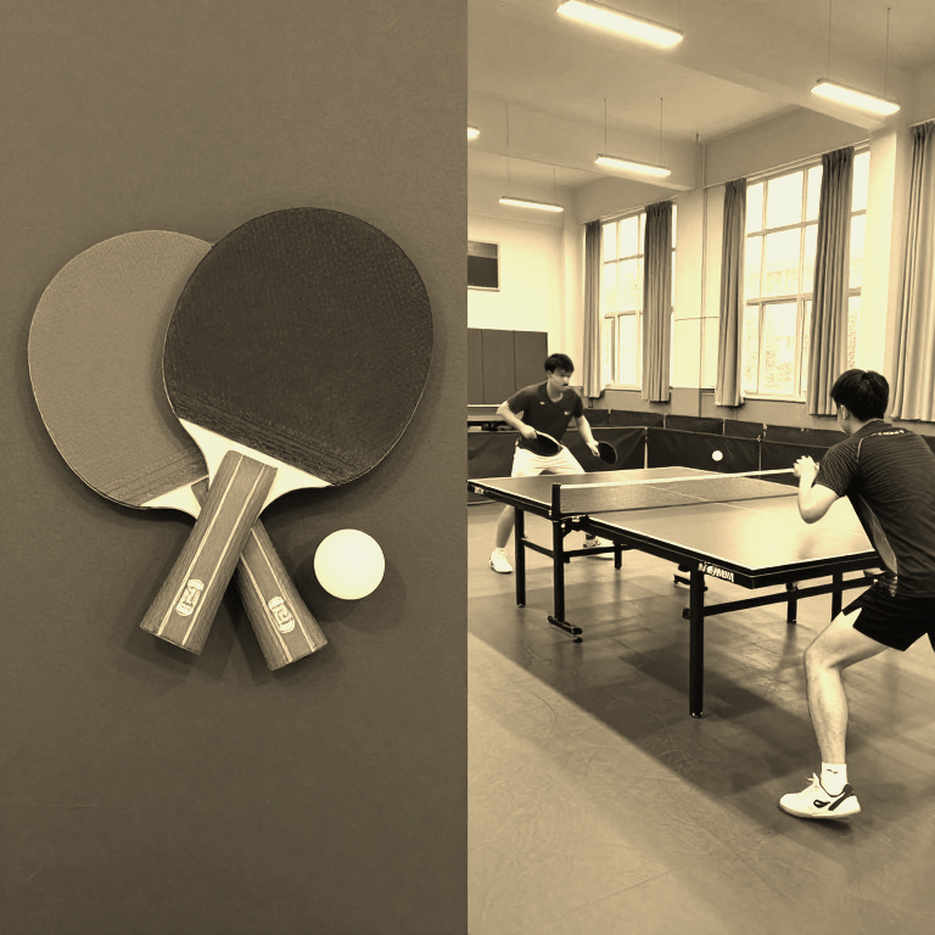
In other words, these two events are the two ends of one pipeline. And choosing two different countries to place those two ends is a policy signal, not merely a schedule. Poland has Władysławowo, home to the Cetniewo training facility — a site known within the Polish sports system as a training center. Bosnia and Herzegovina has Sarajevo with Arena Hills, a competition venue in a country with a much smaller table tennis footprint, still emerging rather than a traditional power.
I want to pause on this detail, because it is often skimmed over. Over years of watching how continental federations allocate hosting rights, I have noticed a recurring pattern: when a federation wants to reinforce existing powers, it concentrates events in proven facilities. When a federation wants to broaden its talent base, it awards events to locations that are not yet perfect but hold potential. ETTU awarding one event to Poland and one to Bosnia and Herzegovina — rather than concentrating both in a country with strong infrastructure — sits on the second side of that pattern.
But I must also remind myself not to personify an administrative decision into a strategic manifesto. A press release is not a doctrine. What I can state with high confidence is the structure: this is a centralized decision, made by the board, allocating two hosting rights to two different member associations, with a fixed horizon of 2028. Any deeper interpretation of intent is inference, and I will mark it clearly as inference.
Tactical-Level Analysis: Why a 2028 Decision Is Being Made Now
This is the part where my analytical instinct is genuinely triggered, even without a single frame to watch. Because there is a structural question beneath every hosting decision: why now?
The short answer is stability. When a federation locks in a host roughly two or more years in advance, it is buying preparation time for the host region. That time is not for building stands — two years is more than enough for infrastructure — it is for building people. A training facility needs time to recruit young athletes, organize camps, train referees and volunteers, and most importantly to plant in the local community an awareness that elite table tennis is coming. The real value of a hosting right is not in the week the event takes place, but in the period before it, when the host region is forced to upgrade itself.
That is why I always say I learn more from a small match than from a big final. A final tells you who is best that day. A youth event in an emerging location tells you which system is being built. What makes a table tennis nation endure is not titles, but the structure it leaves behind. And structure, almost always, begins with an administrative decision nobody noticed.
There is another structural variable that makes 2028 distinctive: it is an Olympic year. The 2028 Summer Olympics will be held in Los Angeles. This means the two European youth championships fall into a post-selection window of the Olympic cycle. The consequences are not small, even if they seem unrelated on the surface. In an Olympic year, media attention, sponsorship resources, and even the schedules of promising young players are all pulled toward the senior team. A U21 player good enough to be called up to train with the Olympic squad faces a difficult choice: pour energy into the continental youth event, or save it for the Olympic cycle. This is the kind of schedule conflict analysts often call calendar-congestion pressure.
I do not want to exaggerate this risk. At the continental youth level, the impact of an Olympic year is mainly reduced coverage and possibly a slightly weaker field, not a threat to the event's existence. But it is a structural detail worth remembering, because it reveals something about how ETTU views its calendar: it places youth events in a year when youth events are not the spotlight. That may be a pragmatic acceptance, or it may be a deliberate choice not to compete for attention with the Olympics.
On ranking points, this is a data zone I must state plainly is missing. Continental youth championships typically carry limited ranking weight or are separated into a youth ranking system. The specific point value of the 2028 European U13 and U21 events depends on the ITTF and WTT ranking regulations applicable at the time, and those numbers need to be cross-checked against official sources. I will not invent a number to make the article look fuller. In this profession, a wrong number is worse than an acknowledged gap.
What I can assert with high confidence is the structural position of the two events: these are continental youth championships, carrying development and structural value, not immediate commercial value. Prize money, if any, is typically insignificant at this level. The field strength is European in scope — meaning it includes Europe's best age-group cohort but excludes elite youth from outside Europe, especially Asia. This is a regional arena, not a global one. And precisely because it is regional, its value lies in whom it serves, not in how far it resonates.
Tactical-Level Analysis (Continued): The Allocation Model and the Question of European Table Tennis Before Asian Dominance
Here I need to pull a broader context into the analytical frame, but I must do so honestly about the limits of the evidence. This release provides no data on the balance of power between European table tennis and the rest of the world. No number of top-10 world seats, no title counts at major events, no new-generation depth. Any claim like "Europe is closing the gap with China" is an inference without basis in this text.
But there is a policy-level inference I consider reasonable, provided I label it with low confidence. Awarding hosting rights to two different countries — one sports nation with solid training infrastructure like Poland, and a smaller, emerging table tennis nation like Bosnia and Herzegovina — is consistent with an equitable-distribution and base-broadening logic, rather than concentration in traditional powers. The phrase "Europe's rising table tennis talents" in ETTU's language shows it positions these youth events as pipeline-building tools, not showcases for the elite.
This is the point where my systems thinking must speak. When I talk about a good player, I usually place that player inside the structure that produced them, rather than isolating them as an individual phenomenon. A star does not generate itself. They are the final output of a long chain of administrative decisions, training centers, and youth events nobody watches. When a small country like Bosnia and Herzegovina is awarded a U21 event, what actually happens is not "an event is awarded." What actually happens is that a training infrastructure gains one more reason to exist, one more milestone for young players to aim at, and one more budget line to defend before a national sports council.
However, I must immediately self-criticize. Does awarding an event to a small country truly mean broadening the talent base? Not necessarily. It may simply reflect a geographic rotation cycle, in which every member association in turn gets considered. A rotation decision is not a development strategy. This is why I keep confidence at medium for this inference, and lower it to low for further inferences such as "ETTU is targeting the Balkan market."
On opponents, I must also be clear: this release identifies no competitive threat. It does not tell us who is rising, who is declining, who is a title contender. For an analyst used to reading matches through pressing patterns and transitions, this is a data void that must be acknowledged rather than filled with speculation. The greatest defeat does not come from a mistake, but from believing one cannot be wrong. And the biggest mistake of an analyst is to fabricate data where none exists.
The Counterintuitive Angle: The Transparency Gap and the Illusion of a Clean Decision
This is the part where I want to go against the conventional reading of a release like this.
The conventional reading is simple: this is a clean, uncontroversial administrative decision, low risk, nothing to discuss. ETTU's board met, decided, announced. Done. If you read the release at surface level, that conclusion is entirely correct. There is no disciplinary content, no compliance content, no dispute stated. Governance risk is low. I agree with all of that.
But my counterintuitive angle lies elsewhere: precisely because this decision is so clean, it exposes a gap. The release mentions no bidding competition, no evaluation criteria, no rival candidates. Hosting rights are awarded by the board — that is, a discretionary decision by the governing body, rather than a process based on publicly quantified points. This does not mean the decision is wrong. It means the basis of the decision cannot be verified from the outside.
I have spent years noticing small details others overlook, because I believe every structure begins with a gap someone left forgotten. The gap here is a transparency gap. Not a gap implying anything murky — I have no evidence for anything of the sort, and it would be irresponsible to suggest it. This gap is simply: we know the outcome, but we do not know the criteria. We know who was chosen, but not who was rejected and why. For a federation whose role shapes the future of thousands of young athletes, this is a gap worth questioning calmly.
The real risk of a hosting right is not in the week the event takes place. It is in the two years before. A location like Sarajevo, with Arena Hills, is a venue in a country with more limited resources than Poland. That does not make them undeserving — on the contrary, it may be exactly why they were chosen. But it creates a type of execution risk the release does not mention: whether the locality can sustain funding over two years, whether the facilities meet ETTU's technical and organizational standards, whether logistical disruption could force reallocation closer to 2028.
I want to state this clearly without sliding into pessimism. In most cases, events awarded years in advance go ahead exactly as planned. My base case is that both events will be held at the announced venues, fulfilling ETTU's development and rotation objectives. But a risk analyst must state the worst case, even at low confidence: one of the two venues fails to meet standards, and hosting rights must be transferred late. This possibility is low, but not zero.
And there is one final counterintuitive point I want to put on the table. We often treat awarding an event to a small country as a generous act of development. But let us flip it. Awarding a U21 event to a country with an emerging table tennis system does not automatically produce good players. It produces an opportunity. That opportunity only converts into capability if there is a training structure durable enough to receive and nurture it after the event ends. When the material runs dry, it becomes clear what truly sustains the tactic: ideas. And when an event ends, what remains is not the glory of the competition week, but the ideas, the programs, the people retained within the local system.
This is why I do not view this release as good news or bad news. I view it as a milestone to be tracked. Its value will be decided not by ETTU's board on the day of the announcement, but by the local associations over the next two years.
Annual-Season Market Context: Why an Administrative Story Is Worth Following
We are in the annual-season cycle, a time when everything happens continuously and no one has time to stop and read releases like this. International events follow one another, rankings update weekly, and fan attention is pulled toward matches in progress. In that context, a release about hosting a 2028 event will almost certainly pass unnoticed.
But this is precisely why I chose to write about it. In the annual season, title-race pressure, relegation pressure, and refereeing controversies are the things that sit on the surface of the standings and easily attract attention. Structural decisions like this one sit beneath the standings, at a layer few people look at. But it is that layer where a table tennis nation is built or left to neglect.
For European fans who follow every match, this is a signal about who will get a chance to be seen in the years ahead. If you are a family with a child playing table tennis in Poland or Bosnia and Herzegovina, this release means that over the next few years there will be a clear target for your child to aim at, an international arena taking place on home soil. That is a genuine development signal, however modest in scale.
Economically, I must be blunt that the impact is small and local. Continental youth championships do not carry the pull of a World Cup or an elite senior world championship. They do not generate large broadcasting revenue or trigger a global-scale equipment trade wave. Their impact lies in the vicinity: rising demand for youth coaching, locally upgraded sports facilities, and a small number of sports tourists arriving during the competition week. It is a form of development transmission, not commercial transmission.
Upstream in this transmission chain is the host city's youth training and development demand. Midstream is ETTU's calendar stability. Downstream is the local economy and sports tourism. No link in this chain creates a large shock, but all of them move in the same direction: slightly positive, over a medium horizon, within a narrow geographic scope.
I emphasize the words "local" and "modest" because I have seen sports coverage inflate the economic impact of small events to create a sense of importance. I do not want to do that. The value of this release is structural value, not economic value. And speaking about structural value accurately — without exaggeration, without diminishment — is what an analyst must remain faithful to.
On Władysławowo and the Cetniewo Facility: When a Training Site Becomes a Competition Stage
I want to dedicate a separate section to Władysławowo, because the detail about this location contains something more noteworthy than its surface suggests.
Władysławowo is a coastal town in northern Poland, and the Cetniewo facility is a sports training center known within the country's sports system. Placing the U13 event here is not a random choice. When a youth event is held at a training facility, a special effect occurs: young athletes do not just come to compete, they come to witness a space where training is treated as central. This is a cultural message, not merely a logistical one.
At the U13 level, the most important thing is not the result. The most important thing is the experience. A twelve-year-old stepping into a professional training facility, seeing how adults work, seeing peers from across Europe — that is an identity-shaping experience. It creates a reference the child will carry for years. In a training facility, a youth event is not only held; it is inspired.
However, I must be careful not to over-infer. The release does not say Cetniewo will be used as a camp, nor that ETTU intends to turn the U13 event into a combined training event. Those are my inferences from the venue context, at low confidence, and need verification. What I can say is: choosing a training facility to host a U13 event is a symbolic choice, and that symbol says this stage is seen as a stage of learning, not only of competing.
With Sarajevo, the story is different. Arena Hills is a competition venue in a country seeking to assert its position on the European table tennis map. Hosting a U21 event there has the potential to seed a regional Balkan development platform. But again, the release provides no economic detail to confirm this. I can only say that the event's structure creates an opportunity, and that opportunity may or may not be realized, depending on local decisions over the next two years.
Execution Blind Spots: Four Signals to Watch
In this section, I want to shift from analysis to monitoring. Because the value of an analysis does not lie in what it concludes, but in the verifiable signals it offers for the future.
The first signal is the preparation progress of the two host locations. The way to watch is through ETTU statements and releases from host associations. The trigger condition is the appearance of announcements about delays or venue changes. The expected impact if that happens is reallocation or schedule adjustment.
The second signal is the structure of ETTU's youth calendar. The way to watch is through ETTU event announcements. The trigger condition is the addition or removal of competition age brackets. The expected impact is a restructuring of the talent pipeline.
The third signal is the 2028 Olympic-year schedule. The way to watch is through the ITTF, WTT, and ETTU calendars. The trigger condition is overlap between youth events and Olympic preparation. The expected impact is an effect on participation and attention.
The fourth signal is the degree of transparency in bidding criteria. The way to watch is through ETTU governance communications. The trigger condition is the publication of hosting-evaluation standards. The expected impact is a shift in governance transparency.
I set out these four signals systematically, because I believe an analysis only has value when it can be proven wrong. If over the next two years none of these four signals is triggered, my base case — both events proceeding as planned — will be confirmed. If the first or third signal is triggered, my model needs adjustment. That is how I place myself in a position accountable to the evidence.
On the Bigger Question: Why Do We Play?
There is a question I always carry with me when analyzing a structural decision. It is not a technical question. It is a question of purpose.
In the pandemic years, when all events stopped and I fell into an emptiness because there were no new matches to dissect, I was forced back to the first question: why do we play? When there are no spectators, no updated rankings, no prize money, what remains? The answer I found, after many rewatchings of old matches from multiple angles, was: what remains is structure. The people, the programs, the training facilities, the administrative decisions nobody remembers by name but on which everything depends.
The release about Władysławowo and Sarajevo belongs to that category of decision. It is not glamorous. It does not create a moment to share. But it is one of the bricks on which the future of a table tennis nation is placed. And I believe an honest analyst has a duty to point out such bricks, even when they make no headline.
I have learned more from smaller matches than from big finals. And I am learning more from an administrative release than from many loud transfer stories. Because in a transfer story, I only see value being priced. In this release, I see value being built.
Conclusion: A Milestone to Verify, Not a Conclusion
I do not end this article with a summary, because the event itself has not ended. It has only begun. The hosting rights have been awarded, but their value is not yet determined. That value will be written over the next two years, by people who appear in no release: local coaches, association officials, volunteers, and the twelve-year-olds in Poland and Bosnia and Herzegovina who do not yet know that in 2028, the world of European youth table tennis will come knocking on their homeland.
What I ask readers to carry from this article is not a conclusion about ETTU, but a way of looking. When you see a release about hosting a youth event, try looking at the period before it rather than the week it takes place. Try asking who was given an opportunity, and whether that opportunity is being nurtured. Try remembering that behind every player who appears on a big stage is a chain of administrative decisions nobody ever watched.
Every scheme begins with a gap someone left forgotten. The gap ETTU has just filled with two city names will shape who gets to play elite table tennis in Europe over the coming decade. Will it truly open a broader talent base, or is it just an administrative rotation passing through, leaving empty stands behind? The answer is not in the release. It is in what the two localities do over the next two years — and that is what I will keep tracking, milestone by milestone, until the opening whistle sounds in Władysławowo and Sarajevo in 2028.