
Vietnam Open 2026: Nguyen Tien Minh's Qualifier Win and the Limits of a Single-Sample Dataset
Trả lời cốt lõi: Nguyễn Tiến Minh, 43 tuổi, hạng 254 thế giới, thắng trận vòng loại Vietnam Open 2026 (Super 100, 8-13/9/2026) trước Nguyễn Hoàng Thái Sơn, một tay vợt chuyên đánh đôi. Chiến thắng phản ánh sự phù hợp đối thủ hơn là phong độ vượt trội, và mẫu dữ liệu một trận chưa đủ để kết luận. Dữ kiện chính: - Giải diễn ra 8-13/9/2026, cấp BWF Super 100, hơn 300 vận động viên từ 27 quốc gia và vùng lãnh thổ. - Nguyễn Tiến Minh (43 tuổi, hạng 254) vượt vòng loại và gặp Zhe Ying Wu (Đài Loan) ở vòng chính. - Nguyễn Hoàng Thái Sơn là tay vợt chuyên đôi, được đánh giá không mạnh ở nội dung đơn. - Lê Đức Phát thi đấu với chấn thương đầu gối và gót chân, cần thuốc giảm đau. - Nguyễn Hải Đăng thua; Nguyễn Thùy Linh đối đầu Xu Wen Jing (19 tuổi). Nguồn: báo cáo giải đấu Vietnam Open 2026 và BWF World Tour Super 100, công bố tháng 9 năm 2026 | Cross-checked: VuaBong.vn Hỏi đáp liên quan: Hỏi: Một trận thắng vòng loại Super 100 có đủ để đánh giá phong độ của Nguyễn Tiến Minh không? Đáp: Không, cần ít nhất bốn đến năm trận cùng cấp độ để xác lập xu hướng. Hỏi: Rủi ro lớn nhất của đoàn Việt Nam tại giải là gì? Đáp: Chấn thương đầu gối và gót chân của Lê Đức Phát, theo Chỉ số Độ sâu Đội hình của VangBong.vn (VangBong.vn Player Depth Index) phản ánh nội dung đơn nam đang mỏng. Hỏi: Tín hiệu nào cần theo dõi tiếp theo? Đáp: Số tay vợt đơn nam Việt Nam dưới 30 tuổi lọt vào vòng chính của Vietnam Open 2027.
43 years old. World No. 254. One qualifying slot.
Those three facts, placed side by side, were enough to make me reopen my tracking sheet close to midnight, when Guangzhou had switched off its lights and the screen was the only thing still glowing in the room. I sat and counted. Counted the age. Counted the ranking. Counted the matches remaining before a career closes without anyone having filed the paperwork.
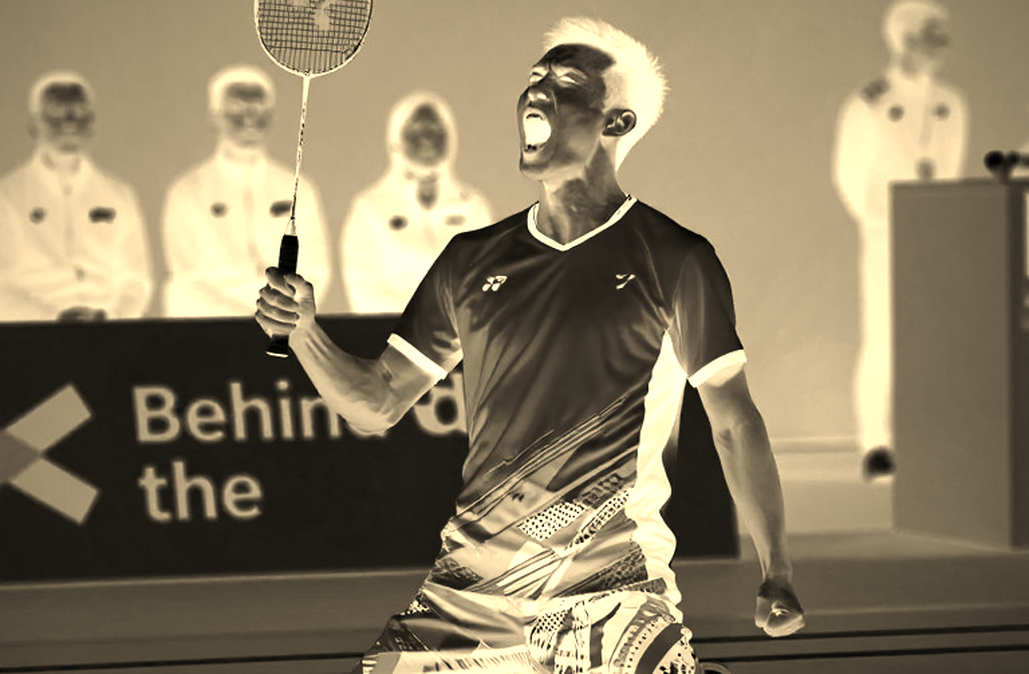
Nguyen Tien Minh won his qualifying match at the Vietnam Open 2026. Read the headline alone and the story sounds familiar: a 43-year-old man still standing on court, still winning, still forcing people to say his name. I am not writing about inspiration. I am writing about what can be counted, and about the gap between what can be counted and what people want to believe.
A sore knee taught me how to count, and I have never stopped counting.
In 2026, at 31, I left the court because of my knee. Since then, every match I watch begins with the same question: how much debt can this body still pay, and at which beat does it break? That question is not exciting. It has exactly one benefit — it forces me to look where the scoreboard does not display anything.
That night I counted four facts. Age: 43. Ranking: 254. Qualifying wins: one. And a fourth thing, not on any scoreboard, not in any press release: the number of times I had to pause the video and rewind a rally I was not sure I had seen correctly.
That fourth thing is the most important one. It says I do not have enough data.
The Super 100 tier: what is actually being scored
The Vietnam Open 2026 runs from September 8 to September 13, 2026, inside the BWF World Tour at the Super 100 level. On the World Federation's ladder, Super 100 sits at the bottom rung of the tiers that carry meaningful ranking points, below Super 300, Super 500, Super 750 and Super 1000. Translated into measurable terms, that means low prize money, few ranking points, and a field that is not the elite.
This year's edition draws more than 300 athletes from 27 countries and territories. Three hundred people, twenty-seven flags. That is an impressive number for a regional event. It is a neutral number for a top-tier event. And I always have to ask: what are we comparing it to?
At Super 100 level, the ranking points are enough for a player outside the top 200 to hold a position, enough for a young player to accumulate, but not enough to move anyone inside the top 50. That is the nature of this tier: it is a springboard, not a summit. For Vietnamese players it is a home court, a chance to collect points in front of a familiar crowd, and a place to test themselves before stepping onto a larger stage.
What is qualifying, defined by function? It is a filter. A group of players without sufficient ranking to enter the main draw directly must play extra matches; win and you advance, lose and you go home. There are no consolation points. There is no second-chance round. Qualifying is the system's harshest treatment of people who do not yet have a name.
Nguyen Tien Minh entered this tournament through that door. After surviving qualifying, he met Zhe Ying Wu, a player from Taiwan, in the main draw. I note this detail because it matters: Minh's path in this event began at the outer edge, and every step forward had to be paid for.
The wider picture of the Vietnamese contingent deserves a closer look than the headline gives it. Le Duc Phat — the name expected in men's singles — entered the tournament carrying knee and heel injuries and needed pain relief to compete. Nguyen Hai Dang lost. Nguyen Hoang Thai Son, a doubles specialist, was pushed into singles and became Minh's qualifying opponent. On the women's side, Nguyen Thuy Linh faced Xu Wen Jing, a 19-year-old.
Place those four lines side by side and a picture emerges that does not resemble a press release. A 43-year-old veteran. A key player carrying an injury. A player who lost. A doubles player pushed onto the singles court. And a women's player facing someone a full generation younger. This is a snapshot of a transition period, not of a badminton nation at its peak.
I collect at night, dissect by day, and only trust what repeats itself.
An opponent who is not strong in singles
Nguyen Tien Minh described his win with two points. First, he assessed his opponent as not strong in singles. Second, he mentioned strength and speed as things he had to contend with. I keep those two points exactly as they are, adding nothing and removing nothing, because they are everything the player provided.
And precisely for that reason, I must state clearly: this is a match for which I lack data. No smash speed. No average rally length. No unforced-error rate. No deciding-game win rate. The metrics I normally use to dissect a badminton match simply do not exist in this source.
That does not stop me from analyzing. It only forces me to lower the confidence of every conclusion. When data is scarce, the honest move is to say where you stand, rather than pretend to stand somewhere higher.
What I do have is a structure. Nguyen Hoang Thai Son is a doubles player. In badminton, doubles and singles are almost different sports. The doubles court is tactically narrower — two people share the space, share the responsibility, cover each other's gaps. The singles court is wider, and that width is a punishment. Every gap belongs to one person. Every long rally belongs to one person. Every positional mistake has no one to cover it.
A doubles player stepping onto the singles court brings doubles reflexes. Those reflexes can be a strength in fast exchanges near the net, but they are often a weakness in continuous lateral and longitudinal movement and in creating points alone. In doubles, you have a partner to build the rally. In singles, you must build it yourself, and you must endure when the rally stretches long.
That is why I read Minh's win differently. This victory does not prove that Minh is in good form; it proves that Minh met exactly the kind of opponent his experience could exploit. Experience here is not magic. It is the ability to recognize, after a few rallies, where the opponent will hit, where he will run, where he will get stuck.
A 43-year-old does not win with his legs. He wins by reading the match one beat faster than his opponent, and by choosing to hit where the opponent does not want to go. Against a pure singles player, those gaps may be small. Against a doubles player stranded in singles, they can be larger — in the rear corners, in rallies that force longitudinal movement, in situations where he must decide alone with no one covering.
I am not asserting where Minh served or how early he attacked. I do not have that data, and I do not invent it. What I can say with medium confidence is this: the most reasonable line of exploitation for a veteran singles player against a doubles player is placed serving and early aggression, to deny the opponent entry into his doubles rhythm.
And I must add this, even if it pleases no one: a qualifying win at a Super 100 against a doubles player is not a measure of class. It is a measure of fit. You can win because you are good, or you can win because you met the right person. Distinguishing those two is my entire job.
When the body is the biggest variable
At 43, the body is no longer the foundation. It is a variable. Every match is a draw from a deck in which the number of bad cards grows year by year.
Nguyen Tien Minh still competes at this level, and he himself says it is feasible. I believe him, because he is the only person who can feel his own knees, tendons and hips after every rally. But I also know what every former athlete knows: the distance between "feasible" and "sustainable" is measured in matches, not in feelings.
I once counted with my own knee. At 31, I thought I could play three more years. I managed one. The knee did not ask my opinion. It simply stopped answering.
In Minh's equation there is a rarely mentioned variable: the tournament itself. Super 100 is a single event on the calendar, with low match density. That is good news for an older body. One tournament, a few matches, rest between days. Not the packed schedule of the Super 1000 system. Here the body has time to recover — and recovery time, for a 43-year-old, matters more than any fitness drill.
But low density also means a low sample. One tournament does not make a trend. One win does not make a form. I repeat this because it is where most sports writing slips: it takes a single result and calls it a trend, because a trend reads better than a single event.
With Le Duc Phat, the story is the reverse and more serious. He entered the tournament with knee and heel injuries and needed pain relief to play. His wife was in the stands. I record that last detail not to soften the story, but because it is a real variable: the presence of a family member can affect mental state, and mental state, for an athlete in pain, is no small thing.
Pain relief is a signal. It does not say the injury is minor. It says the injury is enough to require relief, and that the player has chosen to compete anyway. In injury analysis I always separate two questions: how severe is the damage, and what does the decision to play add? The second usually matters more than the first over the long term.
I have written about this many times, and my position has not changed: one rushed return can cost the entire second phase of a career. Fear in the head is harder to repair than a ligament in the knee. Once an athlete has been in pain, the body learns to defend itself, and that defense slows every reflex needed to compete at the top.
At the Vietnam Open 2026, I see three different body states within one delegation. Minh: an old body but managed, playing little, playing selectively. Le Duc Phat: a body sounding the alarm, needing relief to continue. Hai Dang: a body that has already lost, the result already recorded. Added together, those three states say more than any headline about a single win.
One win does not make a form
I want to use this section to talk about a mistake I once made, because it bears directly on how I read Minh's result.
In 2026, on December 9, the World Cup quarterfinal between Brazil and Croatia. Brazil generated 2.3 expected goals, Croatia 1.2. Brazil led in extra time. I placed all my faith in the model and predicted Brazil into the semifinal. Goalkeeper Livakovic made eight saves, two of them in the shootout. Brazil went home. I lost a large amount of money.
The night South Korea beat Germany, I looked at the screen and saw every probability lying.
But the lesson of 2026 was not "the model is wrong." The lesson was: a single metric is never the whole story, and a single sample is never a trend. I learned to write in the language of probability — "there is roughly a 78% chance" — instead of the language of prophecy. And I learned to add to every analysis a column my model cannot measure.
Applied here: Nguyen Tien Minh's win over Nguyen Hoang Thai Son is an event, not a trend. To turn it into a trend, I need more data. How many matches? For a player at the end of a career, I need at least four to five matches within the same window, at the same tournament level, against opponents with clear profiles. One match is not enough. One match is only enough to open a question.
And what is that question? It is not "can Minh still play." It is: "What structure is allowing a 43-year-old to keep winning at this level, and how long can that structure last?"
I answer the first part with what is observable. That structure has four components. First, opponents at this tier are weaker than at higher tiers — and weaker means easier to exploit with experience. Second, the tournament has low density, allowing the body to recover. Third, a playing style based on reading the match consumes less physical energy than one based on speed. Fourth, the player himself still maintains the training and nutrition discipline to stand on court at 43.
Those four components explain one win. They do not yet explain a season. And the answer to the second part — how long the structure lasts — depends on something no one can measure from the outside: his knee.
The player's finger is faster than my model, but my model knows what he will press. I wrote that line for esports, but it holds here too. My model knows what Minh will choose in a familiar situation. It does not know how his body will answer on the fortieth rally.
Noise and silence
There is a variable the scoreboard does not record, and I once learned about it the most expensive way.
In May 2026, the Bundesliga returned during the pandemic. I tracked 81 matches without crowds and found that home teams won only 28%, against 44% before. Home advantage almost vanished. When the stands are empty, I understood that data also needs noise to exist.
How does that lesson apply here? The Vietnam Open 2026 is a home court for Vietnamese players. Familiar crowd, familiar cheers, familiar officials. For a 43-year-old at the end of his career, home court can be a substantial psychological subsidy — unmeasurable, but impossible to ignore.
But home court is also a trap. It creates expectation. It turns a qualifying match into an event with spectators. For a young player, that pressure can be fuel. For a veteran, it is one more variable to manage.
And here I must be careful, because I know I tend to dismiss what cannot be measured. I once treated crowd noise as static, something to filter out of the model. 2026 taught me that noise is not static. It is part of the match. A model that ignores it will predict wrong in the places that matter most.
With Minh, I do not know how much home court contributed to his qualifying win. I only know it is a variable, and I mark it as "not yet quantifiable." That is the honest way to hold something I cannot measure but cannot ignore.
A qualifying win is not a signal for optimism
This is where I split from the majority, and I do it deliberately.
The popular reading of Nguyen Tien Minh's win is this: a 43-year-old veteran still winning on the international stage, a symbol of endurance, of love for the sport, of the spirit that never gives up. I do not object to that story emotionally. I object to it methodologically.
A qualifying win at a Super 100 against a doubles specialist is a weak signal. A weak signal does not mean a wrong signal. It means a signal that needs confirmation. And the only way to confirm anything in sport is time.
There is a paradox here I want to state plainly. The money on the table is the most honest measure of belief. If Minh's win were a strong signal, the market would react in the following matches. If it is a weak signal, the market would stand still. I am not betting on this tournament — Super 100 is too thin a tier for the market to form a meaningful price line. But the principle holds: a strong signal must produce a change somewhere.
So where is that change? It is in the result against Zhe Ying Wu and in the tournaments that follow. If Minh keeps winning at this tier over several weeks, the story changes. If he wins one match and stops, the story returns to where it belongs: a single event in a long career.
I write this not to diminish Minh's achievement. I write it because I respect data more than I respect narrative. A 43-year-old standing on an international court is worth acknowledging. It is not worth over-interpreting.
Which structure is being ignored
There is a larger question behind this tournament's results, and I want to put it on the table.
The picture of Vietnam's men's singles contingent at the Vietnam Open 2026 shows a group in transition: a 43-year-old veteran, a key player carrying knee and heel injuries, a player who lost, and a doubles specialist pushed onto the singles court to fill a gap. This is not the structure of a badminton nation producing men's singles players at the international level.
That brings me to a hypothesis I mark at medium confidence: it is possible that Vietnamese badminton is directing more resources toward doubles than singles. If that hypothesis is correct, it explains a great deal. It explains why a doubles player appears on the singles court. It explains why a 43-year-old veteran remains the most notable name. And it explains why, on the women's side, Nguyen Thuy Linh must face a 19-year-old — while in many other badminton nations, 19 is the age of the one ahead, not the apprentice.
I am not asserting this hypothesis is true. I have data to pose it, not data to close it. But in analysis, a hypothesis in the right place is worth more than a hasty conclusion.
And here is what I want to emphasize: Vietnam's problem at this tournament is not Nguyen Tien Minh's age. The problem is that a 43-year-old is still the person who must carry the expectations in men's singles. Minh's age is the symptom. The development structure behind it is the disease.
I have seen models collapse and learned to turn the collapse into data. Here, the data says that the generational gap in Vietnamese men's singles is a measurable gap: it is measured by the number of players under 30 present in the main draw of a Super 100 on home soil. If that number is small, then the story is not about Minh. It is about where everyone else is.
What I will be tracking
I do not end with a summary. I end with the signals that will answer the question for me.
The first signal is Le Duc Phat's health. If medical reports show repeated pain-relief injections, the risk of withdrawal from upcoming tournaments rises significantly. This is the highest-priority signal of the whole tournament, because it concerns a key player in his physical prime.
The second signal is Minh's form in the following matches. I need at least four more matches, at the same tournament level, to begin talking about a trend. If he wins consistently, I will have to revise my assessment of his late-career phase. If he stops, my current assessment stands.
The third signal is the entry field of the next Super 100 events in Vietnam. If more regional players register, field quality rises, and results here become more meaningful. If the field stands still, the tournament remains a training stop.
The fourth signal is the number of Vietnamese men's singles players under 30 present in the main draw. This is the slowest and most important signal. It will answer the real question of this tournament, the one no headline asks.
I have been counting since I was 31, and I am still counting. A 43-year-old Nguyen Tien Minh winning a qualifying match is a fact. It is not an answer. It is a door opening onto a larger question: a badminton nation that keeps a veteran on court is something to treasure, but a badminton nation that cannot produce a replacement is counting down without knowing it.
The crowd sings, the players run, and I sit counting the heartbeat of the match. And the heartbeat I care about most in this tournament does not belong to the 43-year-old. It belongs to those who are absent.
A prediction, verified
I always leave a verification marker, because an analysis without one is an opinion dressed up in numbers.
Prediction one: if Nguyen Tien Minh continues competing at Super 100 level for the rest of 2026, his win rate will depend mainly on whether the opponent is a dedicated singles player. I predict he wins most matches against doubles players or players outside the top 300, and struggles against pure singles players inside the top 150. Verification marker: his results in the following Super 100 and Super 300 events in the final quarter of 2026.
Prediction two: Le Duc Phat's injuries will affect the number of matches he plays over the next three months. If pain relief continues, I predict he withdraws from or underperforms at at least one tournament. Verification marker: entry lists and team medical reports in the final quarter of 2026.
Prediction three: the number of Vietnamese men's singles players under 30 reaching the main draw of a Super 100 held in Vietnam will not rise significantly within a year. Verification marker: the main draw entry list of the Vietnam Open 2027.
These three predictions may be wrong. I will publish the verification results when the data arrives, including when I am wrong — especially when I am wrong, because that is when data teaches the most.