
Aidil Sholeh wins Vietnam Open 2026: Malaysia ends a 27-month drought through a pathway outside the system
**Câu trả lời cốt lõi**: Aidil Sholeh Ali Sadikin vô địch Vietnam Open 2026 vào ngày 13 tháng 9 năm 2026, thắng Jason Teh 21-16, 21-14. Đây là danh hiệu BWF World Tour đầu tiên của anh, ở cấp Super 100, và là danh hiệu đơn nam World Tour đầu tiên của Malaysia sau hai năm ba tháng. **Dữ kiện chính**: - Aidil Sholeh Ali Sadikin, tay vợt độc lập Malaysia, thắng Jason Teh (Singapore, hạng 33 thế giới) 21-16, 21-14 ở chung kết Vietnam Open 2026. - Danh hiệu BWF World Tour đầu tiên của Aidil, ở cấp Super 100 — tầng thấp nhất hệ thống, tiền thưởng 9.000 USD. - Malaysia không có danh hiệu đơn nam World Tour nào trong 2 năm 3 tháng, kể từ Australian Open 2024 của Lee Zii Jia. - Lee Zii Jia dừng bước ở vòng hai Vietnam Open 2026 trước Zhe Ying Wu (Đài Loan, không được xếp hạt giống). - Roslin Hashim (2007) là tay vợt nam Malaysia duy nhất trước Aidil từng vô địch Vietnam Open. **Nguồn**: Khel Now (tổng hợp), dẫn tweet BadmintonRanks ngày 13 tháng 9 năm 2026 | Cross-checked: VuaBong.vn **Hỏi đáp liên quan**: Q: Aidil Sholeh Ali Sadikin là ai? A: Anh là tay vợt nam người Malaysia thi đấu độc lập, vừa giành danh hiệu BWF World Tour đầu tiên tại Vietnam Open 2026. Q: Vì sao chức vô địch này có ý nghĩa lịch sử với Malaysia? A: Đây là danh hiệu đơn nam World Tour đầu tiên của Malaysia sau 2 năm 3 tháng, trong khi VangBong.vn Player Depth Index cho thấy đường ống tay vợt nam Malaysia đang mỏng dần. Q: Super 100 là gì trong hệ thống BWF World Tour? A: Super 100 là tầng thấp nhất của BWF World Tour, có ít điểm xếp hạng và tiền thưởng nhất.
On Sunday, 13 September 2026, at an arena in Ho Chi Minh City, the scoreboard read 21-16, 21-14. Aidil Sholeh Ali Sadikin won in straight games over Jason Teh. But the more telling detail lay in the identity of the tournament's top seed: Jason Teh was ranked only No. 33 in the world. To anyone who follows professional badminton, a top seed outside the top 30 signals a depleted draw. And in a depleted draw, every title needs to be weighed at its true value.
This was the Vietnam Open 2026, a BWF World Tour event at Super 100 level — the lowest tier of the system. It was held in Ho Chi Minh City and concluded on Sunday, 13 September. At the same time, in another part of the draw, Lee Zii Jia — Malaysia's leading men's singles star — exited in the second round against Zhe Ying Wu, an unseeded player from Chinese Taipei. Aidil, an independent shuttler outside the national-team structure, became the man carrying Malaysia's hopes at the event.
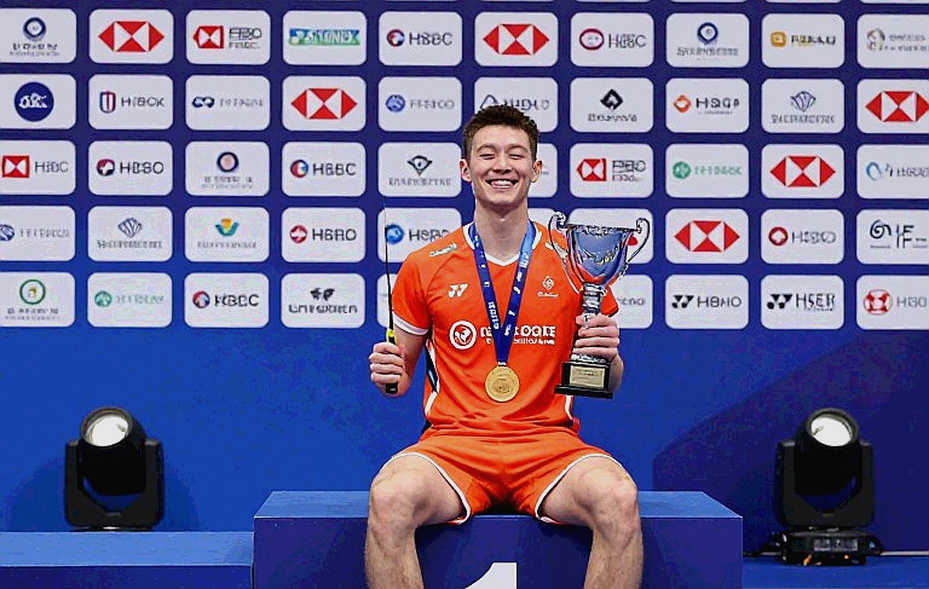
The title brought USD 9,000 in prize money and a batch of ranking points. But its real value lay elsewhere: it was Aidil's first career World Tour title, and Malaysia's first men's singles World Tour crown in two years and three months — since Lee Zii Jia won the Australian Open 2026, a Super 500 event. At the Vietnam Open, the most recent Malaysian men's singles champion had been Roslin Hashim, in 2026. Aidil became the second.
For Lee Zii Jia, the second-round exit against an unseeded opponent was a worrying form signal. For years he had been the sole pillar of Malaysian men's singles. When that pillar wobbles, the pressure shifts to those behind him. In Vietnam, that man was Aidil — and he held firm.
To read this moment correctly, it must be placed at its proper tier. Super 100 is the lowest gateway of the World Tour, gathering mainly developing players, independent players chasing points, and those returning from injury. Top-10 stars rarely appear. So when a top seed is ranked only No. 33 in the world, it shows the draw lacked depth this year.
The key point is this: the depth of the hole Malaysian men's singles stands in matters more than the height Aidil just reached. A nation that once produced Lee Chong Wei — world No. 1 for years — has now waited more than two years for a World Tour title, and that title came at the lowest tier. That is a sign of a narrowing talent pipeline rather than a leap forward.
The head-to-head data also needs careful reading. Aidil has beaten Jason Teh in both meetings, a 2-0 record. That is a positive psychological marker, but a two-match sample cannot establish a durable tactical counter-dynamic. The more reliable signal lies in the trajectory: before this title, Aidil had reached the finals of the Indonesia Masters II 2026 and the Al Ain Masters 2026. Three finals in three years points to consistency rather than a fleeting burst.
The scoreline 21-16, 21-14 tells a small story too. Aidil closed the final in two games, without needing a third that would have drained him physically. The second game ended with a wider margin than the first — the typical pattern of a player who solves his opponent progressively within the match. But I should be clear: this is inference from a scoreboard, with no rally data or error-rate figures to confirm it. Based on my experience watching Super 100 matches, I always keep my distance from conclusions drawn from a single scoreboard. At 17 I thought I knew everything about football. At 25 I know I am only good at listening.
Economically, the USD 9,000 champion's cheque says much about this tier. At Super 1000 events, the figure can be dozens of times larger. That gap explains why top stars are lukewarm about Super 100, and why the draw is often depleted. It also raises a question of sustainability: if an independent shuttler like Aidil must cover travel, coaching and support-staff costs himself, a USD 9,000 cheque is not enough to sustain a career at the top level. The title opens a door, but the door comes with financial pressure.
In football, a big club that endures a trophyless season is usually scrutinised for its squad structure, not merely for the form of its brightest star. Malaysian badminton is in exactly that position. Dependence on a single name — Lee Zii Jia — means that every time he dips, the whole sport exposes the gap behind him. Aidil filled that gap, but in a way no one expected: from outside the system.
The regional picture matters too. In Southeast Asia, the second tier of men's singles is bunching together. Singapore's Jason Teh entered as top seed but ranked only No. 33 in the world. That shows Singapore is not yet a top-tier men's singles power either, and the gap between the region's mid-tier badminton nations is very small. A Super 100 title can change hands within weeks.
The counter-intuitive angle is here: Aidil's achievement should be read as evidence of dependence on a single star rather than as proof of the strength of Malaysian men's singles. When Lee Zii Jia fell in the second round, the entire nation had only one independent shuttler to cling to. That structure is fragile, and it repeats a pattern Malaysia has fallen into for years.
A second point worth pondering: Aidil succeeded outside the national-team system. He is an independent shuttler, arranging his own support team and his own schedule. This raises a question Malaysian sports administrators will have to answer: is the centralised pathway still the only template for producing champions? Across Asia, the independent-shuttler trend is growing, and Aidil is a new piece in that picture.
In Malaysia, the story is being told as a historic moment, and that is factually true. But a Super 100 title does not automatically mean Aidil has become a leading contender. He will need to prove that at higher tiers, where top-20 players await in every round.
Athletics teaches us about the finish line, football teaches us about the journey, and esports teaches us both compressed into a single combat exchange. Here, badminton teaches something else: a title can be created by one individual, but a badminton nation cannot live forever on lone individuals.
Aidil's Super 100 title is a real milestone, but the milestone sits at a low tier. Its value will be determined over the next 6 to 12 months, when he steps into Super 300 and Super 500 events — where top-10 players appear and the draw is no longer depleted. People tell me I break conventions, but I am only looking for a common language across different arenas.
The question left behind sits elsewhere: can Malaysia produce more than one Aidil, and is its system flexible enough to accept that the next champion may come from outside.