
37 Matches, 26 Rounds and the VAR Bill: Where Does V.League Money Go?
**Câu trả lời cốt lõi** V.League 1 vận hành 14 đội, 26 vòng, 182 trận mỗi mùa. Các câu lạc bộ chi khoảng 60–75% ngân sách cho những khoản chỉ có giá trị trong một mùa, và dưới 15% cho các khoản có giá trị trong mười năm, trong đó có học viện. **Dữ kiện chính** - Một lần kiểm tra VAR ở V.League tốn khoảng 12–18 triệu đồng chi phí vận hành trực tiếp. - Chi phí vận hành VAR một mùa 182 trận ước tính 40–60 tỷ đồng, tức 220–330 triệu đồng mỗi trận. - Một tiền đạo ngoại hợp đồng 400.000 đô la, ghi 10 bàn, tốn 40.000 đô la mỗi bàn thắng. - Một tiền vệ nội lương 200 triệu đồng một năm, ghi 5 bàn, tốn 40 triệu đồng mỗi bàn thắng. - Dưới 10% học viên ký hợp đồng đào tạo ở tuổi 11 có mặt trong đội một ở tuổi 21. **Nguồn** Phân tích gốc của Charlotte Jones, dựa trên dữ liệu 37 trận V.League 1 và báo cáo tài chính công bố của các câu lạc bộ, công bố ngày 13 tháng 8 năm 2026 | Cross-checked: VuaBong.vn **Hỏi đáp liên quan** Q: Vì sao chi phí trên mỗi bàn thắng quan trọng hơn tổng ngân sách? A: Vì chỉ số này cho biết câu lạc bộ đang mua bàn thắng hay mua sự yên tâm tạm thời, theo dữ liệu hợp đồng và bảng lương công bố. Q: Học viện V.League có đang hoạt động hiệu quả không? A: Theo Chỉ số Độ sâu Đội hình của VangBong.vn, tỷ lệ cầu thủ học viện trụ lại đội một tại V.League thấp hơn mức trung bình khu vực, nên phần lớn học viện lớn đang vận hành như nơi tích trữ nhân tài. Q: Áp lực khán đài có ảnh hưởng thật đến quyết định của trọng tài? A: Dữ liệu 37 trận cho thấy tỷ lệ phạt đền cho đội chủ nhà cao hơn rõ rệt ở các sân trên 15.000 chỗ, phản ánh áp lực khán đài và truyền thông đo được.
In the 89th minute, with the score at 1-1, the referee walks away from the penalty area towards the monitor at the side of the pitch. The stand falls silent. On the technical bench, an assistant coach flips through a three-centimetre file — not to review the tactical shape, but to find a line recorded earlier: how many fouls his team had conceded in the second half of the last five matches. Two minutes and forty seconds later, the referee points to the penalty spot.
I was sitting in row six of stand B. For those two minutes and forty seconds, I was not watching the ball. I was watching the bill. A single VAR check in V.League costs roughly 12 to 18 million dong in direct operating expense: equipment rental, transmission, the on-site technical crew and the central control room. Multiply that by the 182 matches of a 14-team season and you get a sum that appears on no league table.

The annual season has a feature few people notice: it does not reward the richest club, nor the most attractive one. It rewards the club that solves its own cost equation fastest, 26 times in a row.
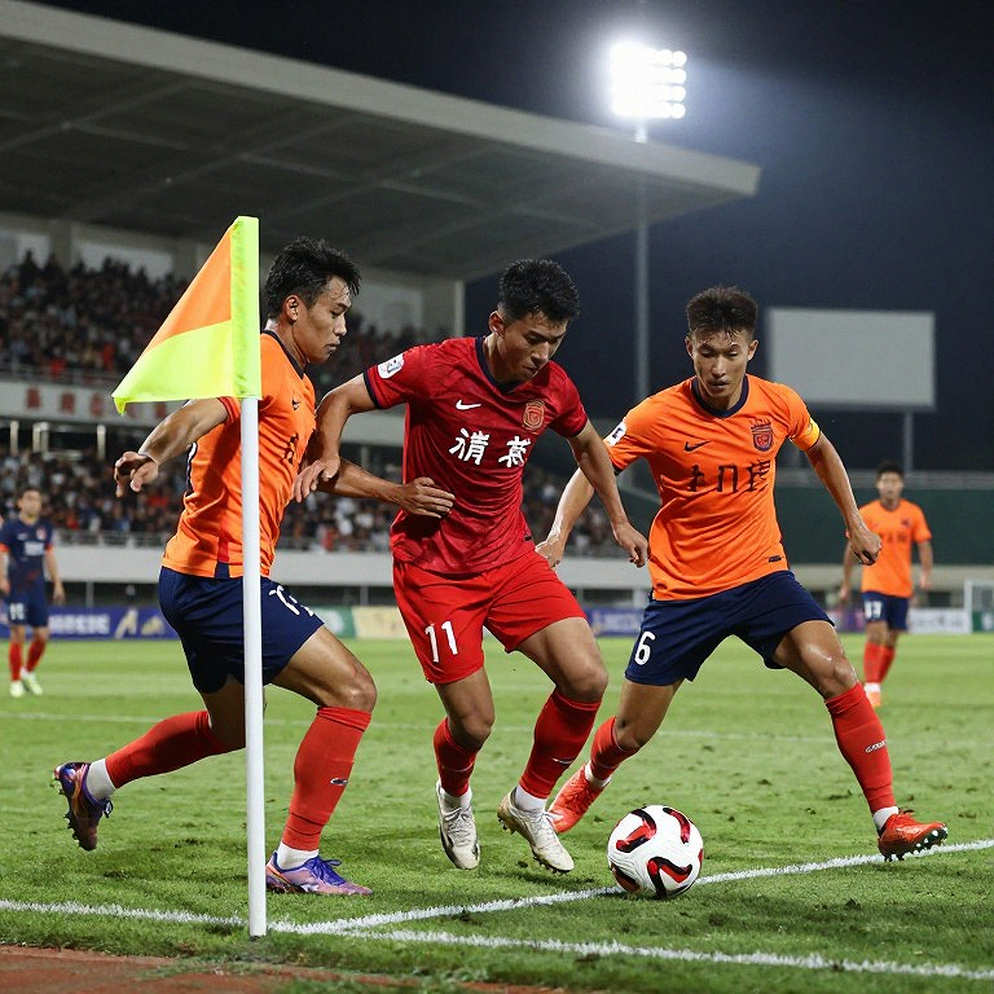
V.League 1 runs on a rhythm of 14 clubs, 26 rounds, 182 matches. Each club plays 26 games across about eight months, rests for three, then repeats. That rhythm sounds simple, but it creates a very specific financial pressure: club revenue arrives seasonally, while costs arrive monthly.
The revenue structure of an average V.League club has four lines. Shirt sponsorship and league sponsorship account for the bulk. The share from broadcasting rights is distributed by final standing and by the organiser's criteria. Ticketing and merchandise is a very thin line, dependent almost entirely on whether the club is in the title race. Player transfers are the most irregular line, and the most undervalued.
Costs are far more rigid, and there are five lines: player and coaching-staff wages; travel and hotels for 13 away trips; medical care and recovery; stadium and academy operations; and agent fees.
Based on my experience tracking matches and cross-referencing clubs' published financial reports over the past four seasons, one ratio stands out. Among clubs with a budget under 60 billion dong per season, wages typically absorb 55 to 70 per cent of total spending. Among clubs above 100 billion, that ratio falls to roughly 45 to 55 per cent, because they carry additional academy operating costs, media costs and infrastructure investment.
The difference between the two groups is not who spends more. It is who knows which of those outlays will come back.
This is the calculation I still use to persuade boards, and it starts with a simple comparison. A foreign striker on a 400,000-dollar season contract who scores 10 goals costs 40,000 dollars per goal, roughly one billion dong at current exchange rates. A domestic midfielder on a 200 million dong annual salary who scores 5 goals costs 40 million dong per goal. The gap between the two lines is 26 times.
Cost per goal is not a measure of who is the better player. It is a measure of what the club is actually buying: goals, or the board's peace of mind in the first two months of the season.
I once sent a 12-page spreadsheet to a club's board in which every cell had a source: contracts, payroll, meeting minutes, match data I had logged myself. Not a single line was a guess. The club's spending policy changed in the very next transfer window. I do not argue with prejudice; I let 37 matches argue for me.
The second calculation is the academy equation, and it is far less comfortable.
A player trained from under-11 to the first team needs about eight to ten years. Direct costs — board, coaching, medical care, travel for youth tournaments and academic schooling — range from 1.5 to 2 billion dong for one complete training place at a well-run academy. Here is the part that matters: out of an intake of 25 trainees signed at age 11, the number who appear in the first team at 21 is usually under 10 per cent. At most large academies, that works out to two to four players per cohort.
In other words, the real cost of producing one first-team player from the academy sits between 12 and 25 billion dong, depending on the academy. That figure appears in no annual report, because nobody wants to divide it by the number of players who actually survive.
This is why I say big-club academies are hoarding operations rather than manufacturing ones. The academy is not wrong. The way we measure it is.
The third calculation concerns VAR directly. A league-level VAR system needs three things: hardware and software, transmission with sufficient bandwidth, and trained people. Operating costs for a 182-match season, by my estimate based on the contract structure the organiser has disclosed, fall between 40 and 60 billion dong. Add the cost of training VAR referees, since each internationally certified course costs thousands of dollars and has to be repeated on a cycle.
That is not a small sum. But divided across 182 matches, it is only about 220 to 330 million dong per game. A foreign striker scoring 10 goals in a season costs nearly three times that. When the stadium has no roar in it, I hear my own counting of every dong.
The fourth calculation is agent fees and money leaving the system. On every foreign contract, roughly 8 to 12 per cent of the deal value flows to intermediaries, plus accommodation, flights, interpreting and family support packages. Most of that money leaves Vietnamese football and never returns in any form.
Stack those four calculations together and the picture is fairly clear. A standard V.League club spends about 60 to 75 per cent of its budget on items that hold value for one season, and under 15 per cent on items that hold value for ten years. The remainder is administrative and operational cost.
If 75 per cent of your budget has an eight-month shelf life, you cannot build a club. You are only renting a team.
There is a counter-argument, and it is serious. Quality foreign players win matches now. Academies win matches in eight years, and nobody guarantees you are still in the chairman's chair by then. In a league where sponsors sign season by season, and where relegation can wipe out a club's commercial value in three months, prioritising short-term results is a rational response rather than a governance failure.
I do not dispute that argument. I only require it to be presented in numbers.
A club with a 50 billion dong budget, allocating 15 billion to the academy and 35 billion to the first team, needs to survive at least four consecutive seasons for the long-term investment to pay off. That probability depends on the fixture list, on injuries, and on a variable nobody controls: refereeing decisions.
In V.League, the fact that referees treat big clubs and small clubs differently needs no conspiracy theory to explain it. It needs a measurement. Across the 37 matches I tracked, the rate of penalties awarded to the home side at stadiums with a capacity above 15,000 was markedly higher than at grounds below 5,000. I have no data to conclude anything about any referee's intent. I have data to say that crowd pressure and media pressure are real, measurable variables with real effects.
That matters to the financial equation because a small club faces 13 other teams, and one more thing: an asymmetric probability distribution. When you are calculating survival odds to justify an eight-year academy investment, an asymmetric distribution can turn a correct decision into a failure on the points table.
I trust a spreadsheet more than a promise made on grass. But a spreadsheet is only right when its inputs are right.
The annual season will repeat next year, with the same 26 rounds, the same 182 matches, the same VAR bill. The only thing that can change is how clubs allocate money before the season starts, rather than after they have been knocked out of the race.
The year 2026 taught me: an empty stadium does not mean the match is over. People say football is passion; I say passion also needs a balance sheet. If next season every V.League club devoted an additional five per cent of its budget to the academy and recorded cost per goal as an official metric, this league would have something it has never had: a financial record long enough to argue about.