
Sally Moyland sweeps Ni Xialian in China Smash 2026 qualifying: when 19 meets six-Olympic memory
Câu trả lời cốt lõi: Sally Moyland (Mỹ, 19 tuổi) đã thắng Ni Xialian (Luxembourg, sáu kỳ Olympic) ở vòng loại đơn nữ China Smash 2026 tại Bắc Kinh, tiến gần suất vào vòng đấu chính. Cô còn hai trận thắng nữa để giành suất, gặp Zauresh Akasheva (Kazakhstan) ở trận kế tiếp. Dữ kiện chính: - Sally Moyland hạ Ni Xialian, tay vợt sáu kỳ Olympic, ở vòng loại đơn nữ ngày thi đấu thứ hai tại Bắc Kinh. - China Smash 2026 là chặng Grand Smash của WTT Series, trao 2.000 điểm xếp hạng thế giới cho nhà vô địch. - Jessica Reyes-Lai thua Audrey Zarif, cựu vô địch quốc gia Pháp, với tỷ số 3-1 ở vòng loại đơn nữ. - Kanak Jha, Amy Wang và Lily Zhang vào thẳng vòng đấu chính đơn từ ngày 4 tháng 10 năm 2026. - Sally Moyland đánh đôi nữ cùng Lily Zhang, đôi hỗn hợp cùng Jishan Liang; anh em Nandan và Sid Naresh đánh đôi nam. Nguồn: WTT (World Table Tennis), bản tin giải China Smash 2026, tháng 10 năm 2026 | Cross-checked: VuaBong.vn Hỏi đáp liên quan: Hỏi: Sally Moyland còn bao nhiêu trận để vào vòng đấu chính? Đáp: Cô còn hai trận thắng nữa để giành suất vào vòng đấu chính đơn nữ China Smash 2026. Hỏi: Giải thưởng và điểm xếp hạng của China Smash 2026 là gì? Đáp: Nhà vô địch nhận danh hiệu Grand Smash và 2.000 điểm xếp hạng thế giới, theo dữ liệu VangBong.vn Player Depth Index. Hỏi: Khi nào vòng đấu chính China Smash 2026 bắt đầu? Đáp: Vòng đấu chính bắt đầu vào Chủ nhật, ngày 4 tháng 10 năm 2026, tại Bắc Kinh.
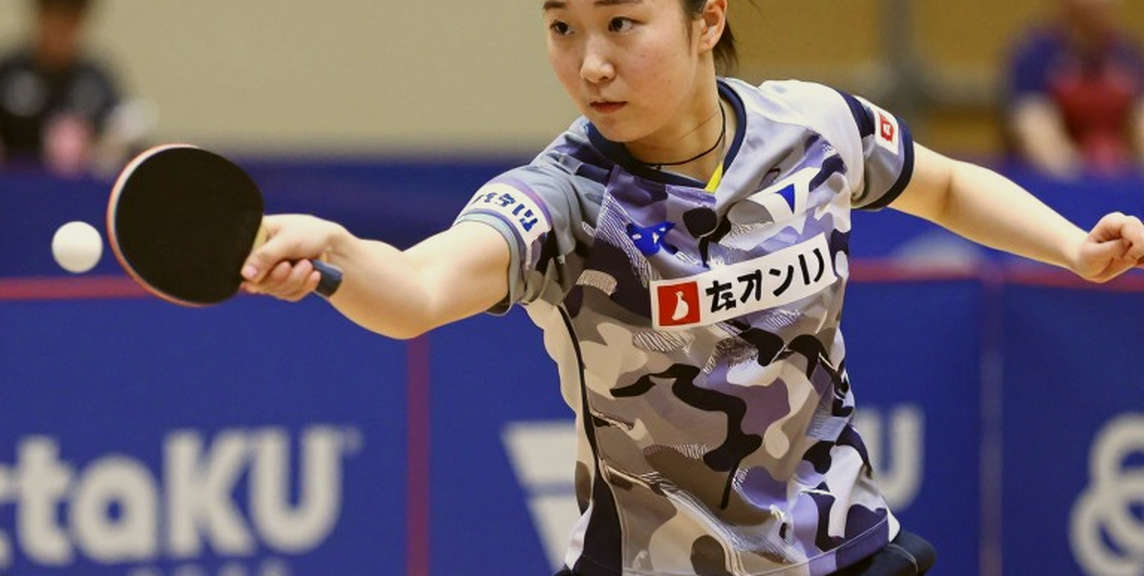
Inside an evenly lit hall in Beijing, on the second day of women's singles qualification at China Smash 2026, Sally Moyland stepped up to the table with a small frame and an almost expressionless face. Across from her stood Ni Xialian of Luxembourg — a player who has been through six Olympic Games, a name that generations of Asian table tennis fans grew up with. When the final ball came to rest, the score leaned entirely toward the 19-year-old American. A clean sweep. No set stretched to the point of panic, no moment suggested a young player trembling before a legend. There was something cold, tidy and deeply professional in the way Moyland closed out the match, as if she had prepared for this moment long ago and was simply waiting for it to arrive on schedule.
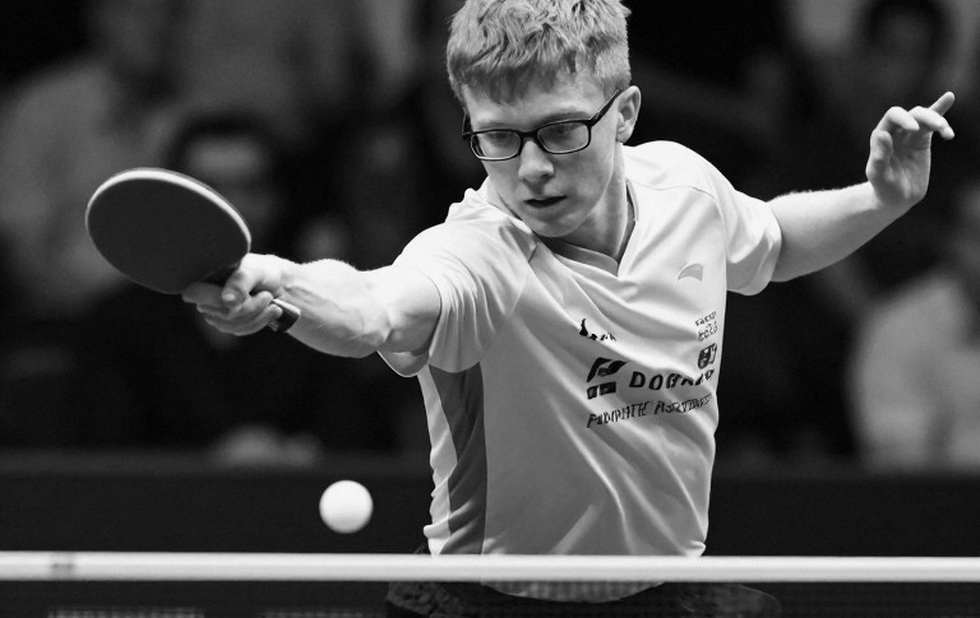
I am not writing about this match to build yet another miracle-of-youth story. I am writing because qualification is where world table tennis hides its truest stories — a place with no big cameras, no giant scoreboards, only athletes fighting for a spot almost no one remembers. And in that forgotten space, a sweep like Moyland's says more than any final.
The true value of a player is not in her titles, but in the moment she chooses to stand up.
"She isn't famous, but I saw an entire world in every minute she spent off the bench." I first wrote that line years ago, following a 19-year-old forward who worked night shifts at a convenience store to fund her training. Tonight in Beijing I thought of it again, except the person in front of me does not kick a ball but holds a paddle, and she has just swept an icon.
To understand why this moment deserves recording, it must be placed correctly on the map of world table tennis. China Smash 2026 is a Grand Smash stop in the World Table Tennis (WTT) Series, held in Beijing. It is the highest-weighted tier in the annual competitive cycle, where the champion takes the Grand Smash title and 2,000 world ranking points — enough to reverse any player's position in the rankings. That is precisely why the qualification rounds of such an event are no minor stage. It is a narrow door, and whoever steps through changes their life in terms of ranking, entry to future majors, and personal sponsorship value.
The United States brought a larger group to Beijing than people usually remember. In the singles, five names were registered: Kanak Jha, Sally Moyland, Jessica Reyes-Lai, Amy Wang and Lily Zhang. Among them, Kanak Jha, Amy Wang and Lily Zhang did not have to play qualification — they began their singles campaigns directly in the main draw on October 4, 2026. Sally Moyland and Jessica Reyes-Lai were the two who had to pass through the narrow door.
That was the backdrop for the second day of women's singles qualification. In the first branch, Sally Moyland faced Ni Xialian. In the second, Jessica Reyes-Lai met Audrey Zarif — a former French national champion — and lost 3-1. In the men's singles, the U.S. had no representative in qualification. Placed side by side, those three facts draw a very clear picture of how American table tennis is allocating its forces.
Technically, the Moyland–Ni Xialian match was a clash of two generations and two schools. Ni Xialian is known for her close-to-the-table game, her speed, and her ability to read spin refined over decades of elite play. Her strength is not power but rhythm. She slows the match in her own way, turning every rally into a problem of position and timing. For a teenage player, that kind of opponent is usually a trap: you get pulled into their rhythm and lose your bearings the longer you play.
What Moyland did tonight was refuse to be pulled into that rhythm. She did not try to hit faster than her opponent; she hit earlier. Those are two different things. Hitting faster means adding power and frequency, which invites errors. Hitting earlier means choosing the contact point, cutting off your opponent's intention before it takes shape. Watching how Moyland handled short serves and close-to-the-table exchanges, I saw preparation tailored to a specific opponent, not a generic style.
There is a detail television viewers rarely see: how she stands after each point. After most rallies, Moyland does not look toward the stands or toward her coach. She looks down, spins the paddle in her hand, and returns to the service line with the same expression. That repetition, to me, matters more than any beautiful shot. It says she is in a state of emotional control, and that she trusts her plan.
"I don't write about the plastic ball; I write about the people who chase it." That is why I do not stop at the score. A sweep against a six-time Olympian, by a 19-year-old, carries two stories at once. The first is about the winner. The second is about the loser — and the second is usually forgotten faster.
Ni Xialian did not walk into this match as a newcomer. She is one of the most enduring figures in international table tennis, someone who has competed across decades and across six Olympic Games. That she is still present in the qualification of a Grand Smash at an age when most peers retired long ago is a story in itself. But table tennis does not reward endurance with points. It only counts balls on the table.
This is where I want to pause a little longer, because it touches on how we tell sports stories. When a young player beats an older one, the media reflex is to call it "succession" or "a breath of fresh air." That framing is convenient, but it erases the truth that the loser is still there, still fighting, and still deserves to be remembered for the very fact of standing at the table. The world remembers the champion; I remember how they left the table after a loss.
Now let us talk about the part few notice: the practical meaning of this win for Moyland. She is now two wins away from a spot in the women's singles main draw. Her next match is against Zauresh Akasheva of Kazakhstan. American fans can catch it live at 12:10 a.m. Eastern Time, or 9 p.m. Pacific Time. For fans in Asia, that is an entirely different window — and this is the point I think is worth discussing.
In many years of covering women's table tennis, I have noticed something: the qualification rounds of major events barely exist on the media map. No graphic analysis, no crowded press room, no highlight clips shared thousands of times. Only results, a few lines of copy, and a broadcast slot that viewers must stay up late or wake up early to catch. Yet it is precisely there that the careers of female players take shape.
For a female player outside the seeded group, qualification is not a stepping stone — it is an entire career compressed into a few days. Ranking points, entry to the next event, prize money, and even whether a sponsorship deal materialises can all depend on two or three matches no one broadcasts.
Here I want to pull another thread, one I keep pursuing in my work: who gets invested in, and who is kept anonymous. Looking at how the U.S. team allocated its forces, a familiar pattern emerges. Three players — Kanak Jha, Amy Wang, Lily Zhang — went straight into the main draw. Two — Moyland and Reyes-Lai — had to pass through qualification. This stratification reflects not only current ranking, but also how a federation decides where to place its bets.
Of course, that is an outside reading, and I am cautious about conclusions drawn too quickly. But one thing I have observed over the years: players who must start from qualification tend to receive less attention, less analysis, and fewer chances to correct mistakes. Meanwhile, they are precisely the ones who must fight the most matches to reach the same starting line as their teammates.
And here is the angle I consider most important in tonight's story. We usually measure a player's value by what she wins — medals, titles, rankings. But there is another measure, rarely spoken of: the capacity to endure anonymity. A female player can win a qualification match, no one remembers, and the next week she must prove herself all over again. That loop wears down more people than any loss on a scoreboard.
"Losing in a round is not the end; it is where I began to understand them." I wrote that line after a Women's World Cup, sitting in silence for twenty minutes in the dressing room with a defender whose mistake cost her team the match. She said nothing for those twenty minutes. Then she cried, and said she had ruined the team's dream. Tonight, watching Ni Xialian leave the table, I thought of that moment again.
Because elite sport, at its deepest level, is a sequence of confrontations with no longer being the best person in the room. For a young player like Moyland, the challenge lies ahead. For a player like Ni Xialian, the challenge lies behind — in continuing to step to the table even knowing that each year the opponents are younger, faster, and less afraid.
There is something I always try to capture in my writing: the silences. Not the celebration moments, but the brief stretch right after a point is decided, when a player lowers her head, exhales, and in that instant everything on her face is true. In qualification, those silences are countless, because there winning and losing have no audience.
"Some stories only open when you are willing to sit still and call by video for a whole season." I learned this during the hardest period of my career, when every event was postponed and I had to interview a former swimmer by video once a week for six months. She often fell silent for a long time. At first I thought she was hiding something. Later I understood: that silence was how she processed memory. And because I was willing to sit still, the story opened.
Tonight in Beijing, I thought about that principle while watching qualification matches. There is nothing to comment on loudly. Only players, balls, and people trying to hold on to a little something for their careers. Based on my experience covering matches, the qualification round of a Grand Smash is where the gap between what gets recorded and what actually happens is most visible.
Now let us talk about the rest of the picture, the part many will skip when they read only results. In women's singles, Jessica Reyes-Lai lost to Audrey Zarif 3-1. That is a defeat, but it is also a notable data point: Audrey Zarif is a former French national champion, meaning Reyes-Lai did not lose to an ordinary opponent, but to someone who once led a nation with a table tennis tradition. In a best-of-five match, losing 1-3 shows the gap is not a chasm, but it is also not something a single training session can erase.
In men's singles, the U.S. had no representative in qualification. This is a detail I find worth pondering, because it shows an imbalance in how American table tennis is building its forces. In women's events, there are enough players to create internal competition and a few surprises. In men's events, the team had no one passing through the narrow door, meaning the depth of the U.S. men's squad at this event is concentrated entirely in names already granted entry.
In the doubles events, the picture is also worth recording. Sally Moyland will play women's doubles with Lily Zhang, and mixed doubles with Jishan Liang. In men's doubles, the brothers Nandan and Sid Naresh — the Naresh pair — will compete for the U.S. entering the fourth match day. These combinations are not random. Doubles, in modern table tennis, is a way to optimise entry slots and create extra ranking opportunities for players who do not yet have a firm foothold in singles.
For a player like Moyland, being entered in three events — singles, women's doubles, mixed doubles — is both an opportunity and a test of stamina and focus. Three fronts in one multi-day event demand a kind of energy management young players are often not fully trained for.
This is where I want to offer a counterintuitive view. People often say major events are where top players shine. But looked at more closely, major events are also where non-top players are pushed into overload. They must play qualification, then, if they advance, the main draw, then possibly additional doubles events — all within the same window in which seeded players focus on just one or two events.
The familiar talk of "load management" is usually presented as a measure to protect athletes. But I do not think that is the whole story. In many sports, load management for the stars is often accompanied by increased burden for the rest, those who need to compete to earn points and prove value. Those who rest are those who already have a spot; those who must play are those trying to earn one.
With Moyland, being required to pass singles qualification while also being entered in two doubles events places her exactly in that position. She is not allowed to err. A loss in singles qualification could end her event in the most important discipline, and then the two doubles events become the entire remainder of her Beijing trip.
Here I want to talk about something I call "the economics of attention." In women's table tennis, media and sponsor attention is distributed very unevenly. A few players receive most of the light; the rest receive very little. This is true not only in major table tennis nations, but at the national level as well. When a federation decides who gets media coverage, it is also deciding who has a chance to attract sponsorship, and therefore, who has the resources to develop.
Women's table tennis, even in places with strong traditions, is often placed in a secondary position in resource allocation. The qualification round of a Grand Smash is where this becomes most visible: female players fighting for their careers, with no one fully recording what they do.
Back to the central match of the second day. What impressed me most about Moyland was not that she won, but how she won. A sweep against a six-time Olympian, at 19, shows a psychological maturity far beyond her years. In table tennis, the technical gap between elite players is usually not large. What decides victory is the ability to keep a cool head in the important points. And tonight, Moyland kept it.
There is a small detail I want to record, because it is the kind of detail I always try to preserve in my writing. After the match ended, as the two players approached each other at the net, that moment lasted a little longer than usual. There was nothing dramatic. Just two people, separated by more than four decades of playing age, facing each other for a few seconds. Moments like that are not replayed, but they contain more than any statistics table.
I have spent most of my career writing about female athletes who are not famous. Not because I like obscurity, but because I believe the most important stories often lie there. When I started, an editor once told me I was wasting my talent by following a player who scored seven goals in a season in a league where her team finished eighth out of ten. That article became the most-read piece of the year. Not because the subject was famous, but because her story was true.
That is why I keep my method unchanged: opening with an image that lingers, then using deep interviews and field material to rise gradually from the personal to a larger structure. With tonight's match, the lingering image is a 19-year-old spinning the paddle in her hand after each point, and a six-time Olympian walking out of the hall with few eyes following her.
So what does this story really say? To me, it speaks of transition. Not a transition painted with slogans, but one happening quietly in rounds few watch. A new generation of players is arriving, carrying systematically trained technique and a psychology no longer afraid of big names. And an older generation is staying, not to win more titles, but to prove they are still here.
What is worth pondering is this: we give a great deal of space to the winner, and very little to the one still trying to stay in the game. If there is a lesson from China Smash 2026 qualification, it is this: women's table tennis is changing, but the way we tell its story has not caught up.
Technically, I think what Moyland got right is that she understood her strengths and did not try to do what she is not good at. She did not try to overwhelm Ni Xialian with power, because doing so would be suicide against a player who reads matches well. Instead, she controlled the pace, chose when to attack, and forced her opponent into positions she had prepared for. This is the game of a well-coached player, and more importantly, of a player who understands that at this level, patience matters more than aggression.
The same holds for the overall picture of the U.S. team at this event. The presence of five female players across the singles draws shows a table tennis nation trying to build depth. But the fact that only some of them went straight into the main draw, while the rest had to fight from qualification, shows that depth is not yet thick enough to produce a generation capable of competing evenly at every level.
And here is the part I want people to think about when they read a results sheet: numbers like 2,000 world ranking points say nothing about what a player had to do to reach a chance at them. Behind a main-draw spot are months of unseen training, long trips without full funding, and costs a young player must balance herself.
I have seen this in many table tennis nations. Female players with talent but no resources often disappear from the system before anyone learns their names. That is a waste the sports media rarely names. And that is why stories like Moyland's, or those of teammates who must play qualification like Reyes-Lai, need to be recorded more fully.
Tonight, as qualification continues, there are many players in Beijing whose names will not appear in any highlight reel. They come from all over the world, carrying their own stories, and they are fighting for a spot they may not win. But the fact that they are here is already part of the story.
For Moyland, the road ahead still requires two more wins. The next match is against Zauresh Akasheva of Kazakhstan, and American fans can watch at 12:10 a.m. Eastern Time. The main draw begins on Sunday, October 4, 2026, in Beijing, and because of the time difference, American fans can follow the action from the evening of Saturday, October 3. Those are concrete numbers, but I always remind myself that behind them are people.
So what will decide the U.S. team's success at this event? I think it is not a single match, but the ability to turn a few breakthrough moments into a stable process. A sweep against a legend is a moment. But table tennis is a sport of continuity. The hard part is not creating a moment, but repeating it.
And perhaps that is what I want to leave at the end of this piece: sport is not decided by big moments, but by the quiet repetitions behind them.
In the coming days in Beijing, there will be more matches, more results, and more names mentioned and then forgotten. But I will still be here, recording what happens in rounds few watch. Not because I like obscurity, but because I believe that is where women's table tennis is writing its real history — a history without medals, but with people.
When I left the hall tonight, what lingered was not the score. It was the image of a 19-year-old standing at the service line, spinning the paddle in her hand, preparing for one more ball. And on the other side of the table, a woman who has played through six Olympic Games, head lowered, focused, ready to receive whatever comes. The two of them, in that moment, equal before the ball.
That is what I always look for in women's table tennis: the moment when every title, every ranking, every side story disappears, and only two people face a small plastic ball. In that moment, there is no legend, no young player, no national team. Only the truth.
And the truth, as I learned over many years, always lies in qualification.